


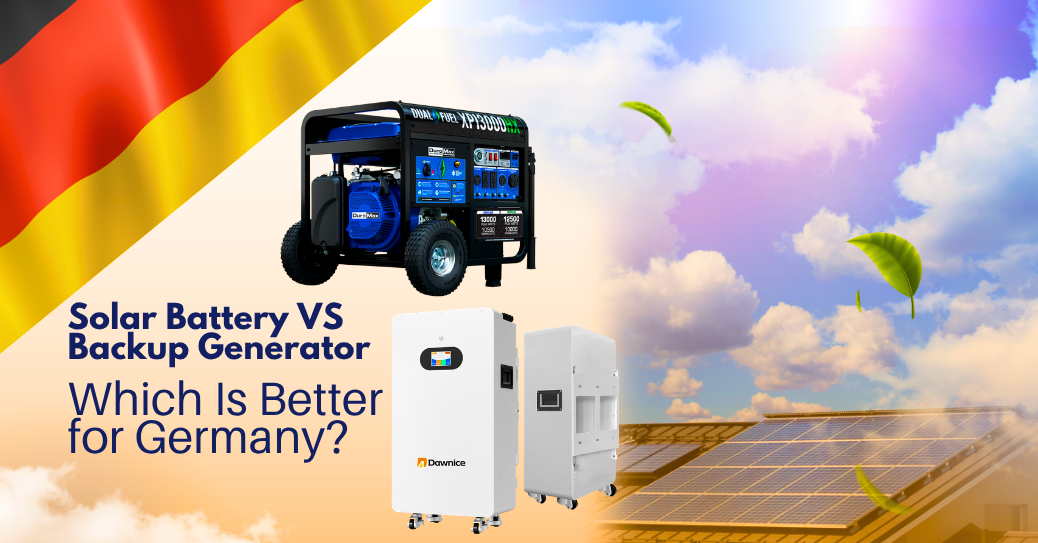
German households pay some of the highest electricity prices in Europe. New customer contracts average around 34.87 cents per kWh in early 2026, while the broader household average sits near 37 cents per kWh according to BDEW data. This combination of rising energy costs and concerns about grid reliability has many homeowners asking an important question: Solar Battery vs Backup Generator: Which Is Better for Germany?
Should you invest in a solar battery for home energy storage, a backup generator for power outage protection, or combine both systems for greater energy security? This guide compares the real costs, performance, and long-term value of solar batteries and backup generators in Germany. Using current German market data and practical homeowner insights, it explains which backup power solution best matches your home, budget, energy needs, and renewable energy goals.
Why This Decision Matters Right Now
Energy security in Germany looks different than it did five years ago. Grid reliability remains strong, with a national SAIDI value of just 11.7 minutes of unplanned outage per customer in 2024. That number ranks Germany second in Europe, behind only Switzerland. So blackouts are rare events, not daily risks.
Yet electricity costs keep climbing for most households. The renewable energy surcharge, grid fees, and taxes still make up over half of every bill. Meanwhile, solar battery prices have dropped sharply. Home storage now costs as little as 270 euros per kWh in 2026, down from over 1,000 euros per kWh a decade ago.
This shift changes the calculation. A solar battery in Germany saves money on daily electricity bills. A backup generator protects against the rare but real outage. Each device solves a different problem, and understanding that difference matters more than picking a winner.
What Is a Solar Battery System?
A solar battery stores excess electricity generated by rooftop solar panels. Instead of exporting surplus power to the grid for a small feed-in tariff, you store it for evening use. Most German homeowners use lithium iron phosphate (LFP) batteries, which offer long cycle life and strong safety records.
A typical home battery ranges from 5 kWh to 15 kWh in usable capacity. Smaller households often choose 5 to 10 kWh systems. Larger families with heat pumps or electric vehicles frequently install 10 to 15 kWh units or more.
The battery connects to your solar inverter and home electrical panel. During the day, solar panels charge the battery first, then export any remaining surplus. At night, the stored energy powers your home before you draw from the grid. This process increases self-consumption rates from roughly 30 percent to 70 percent or higher.
What Is a Backup Generator?
A backup generator produces electricity on demand, usually by burning diesel, petrol, or natural gas. It activates during a power outage and keeps essential circuits running until grid power returns. German homeowners typically choose between portable generators and permanently installed standby units.
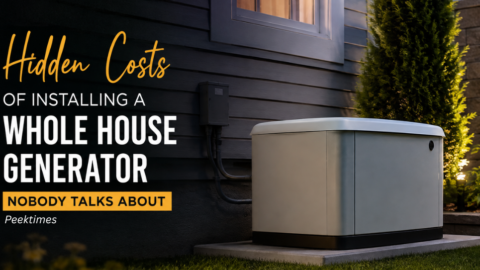
Portable generators cost less upfront and suit occasional use, such as camping or short outages. Standby generators install permanently outside the home and start automatically within seconds of a blackout. They connect through a transfer switch that isolates your home circuit from the grid during operation.
Generators do not reduce your daily electricity bill. They exist purely as insurance against outages. Fuel costs, engine noise, and emissions come with every hour of use. For most German homes, that makes generators a backup tool, not a primary power source.
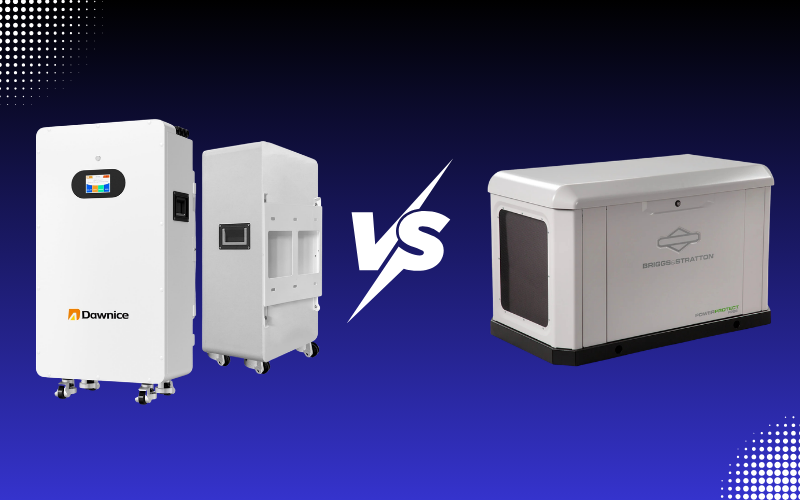
Solar Battery vs Backup Generator: Head-to-Head Comparison
The table below compares both systems across the factors German homeowners care about most.
| Feature | Solar Battery | Backup Generator |
|---|---|---|
| Primary purpose | Daily bill savings plus backup power | Emergency backup power only |
| Typical upfront cost (10 kWh / 10 kW) | €3,000–€6,000 (with subsidies) | €1,500–€8,000 depending on type |
| Ongoing fuel cost | None | €1.60–€1.90 per liter diesel/petrol |
| Noise during operation | Silent | 55–90 decibels |
| Emissions | Zero at point of use | CO2, NOx, particulates |
| Runtime on full charge/tank | Several hours to a full evening | 8–24 hours per tank, refuelable |
| Maintenance | Minimal, mostly software updates | Regular oil changes, filters, testing |
| Lifespan | 10–20 years | 10–30 years with maintenance |
| VAT on purchase (with solar, up to 30 kWp) | 0 percent | 19 percent standard rate |
| KfW subsidy eligibility | Yes, via KfW 270 program | Limited, mostly commercial |
| Reduces electricity bill | Yes, significantly | No |
| Works during a total grid blackout | Only with backup-capable inverter | Yes, by design |
This comparison shows the core trade-off clearly. A solar battery earns its cost back through savings. A generator earns its value through readiness, not routine use.
The Real Cost of a Solar Battery in Germany in 2026
Battery prices have fallen steadily as lithium-ion production scales up worldwide. In 2026, German homeowners pay roughly 315 euros per kWh on average for a home storage system, including installation. A 10 kWh battery, fully installed, now costs between 3,000 and 5,000 euros.
Larger systems benefit from better economies of scale. Batteries above 15 kWh often drop below 390 euros per kWh. Premium brands with advanced software and longer warranties still charge more, sometimes exceeding 700 euros per kWh for smaller 5 kWh units.
Germany also offers strong financial incentives. Purchasing a battery alongside a solar PV system up to 30 kWp carries zero percent VAT. The KfW 270 loan program finances up to 100 percent of the combined solar and battery cost at low interest rates. Some federal states and municipalities add their own regional grants on top.
Payback Period for Solar Batteries
Most German homeowners recover their battery investment within 8 to 12 years, depending on electricity prices and usage patterns. Since average household electricity costs sit near 37 cents per kWh, each stored kWh you use instead of buying from the grid saves real money daily.
Households with heat pumps or electric vehicles see faster payback. These appliances shift consumption toward times when solar output is low, making stored solar energy far more valuable. Combining a battery with a heat pump often maximizes self-consumption and shortens the return on investment.
The Real Cost of a Backup Generator in Germany
Generator prices vary widely based on power output and fuel type. A small portable petrol generator producing 2 to 3 kW starts around 400 to 800 euros. These units suit basic needs like running a refrigerator or a few lights during a short outage.
Mid-range portable units with 5 to 8 kW output cost between 1,200 and 3,000 euros. These can power several circuits at once, including a well pump or a home office setup. Standby generators with automatic transfer switches represent the top tier, often costing 5,000 to 15,000 euros installed.
Fuel remains the ongoing cost that generator owners forget to budget for. Diesel prices in Germany hover around 1.60 to 1.70 euros per liter in 2026, while petrol runs slightly higher. A mid-size generator under moderate load burns roughly 1 to 2 liters per hour. Running one for a 48-hour outage could cost 80 to 150 euros in fuel alone.
Maintenance and Hidden Costs
Generators need regular exercise to stay reliable. Manufacturers recommend running standby units monthly, even without an outage. This uses fuel and requires oil changes on a fixed schedule, typically every 100 to 200 operating hours.
Storage also matters. Stored diesel and petrol degrade over time and need periodic replacement or stabilizer treatment. Homeowners must factor in soundproofing costs too, since German noise ordinances restrict generator operation hours in residential zones.
Electricity Prices and Grid Reliability in Germany: The Data
Understanding Germany’s electricity market helps explain why battery storage appeals to so many homeowners now. The table below summarizes key figures for 2026.
| Metric | 2026 Figure |
|---|---|
| Average price, new household contracts | 34.87 ct/kWh |
| Average price, all household contracts (BDEW) | 37.0 ct/kWh |
| Average annual grid subsidy from government | €6.5 billion |
| Estimated household savings from grid subsidy | ~€160/year |
| National SAIDI (unplanned outage minutes, 2024) | 11.7 minutes |
| SAIDI 2023 (previous year comparison) | 12.8 minutes |
| Average home battery price per kWh | ~€315/kWh |
| Entry-level battery pricing | From €270/kWh |
| Diesel fuel price (per liter) | €1.60–€1.70 |
These numbers tell a clear story. Germany’s grid stays remarkably stable, so most homes rarely lose power. But electricity costs remain persistently high, which makes daily savings the bigger opportunity for most households.
When a Solar Battery Makes More Sense
A solar battery fits best for homeowners who already own or plan to install rooftop solar panels. Without solar generation, a battery has nothing meaningful to store, so it loses most of its value. Pairing both systems together produces the strongest financial return.
Households with high daytime solar output but evening-heavy consumption benefit the most. Working families who leave home during the day and cook, wash, and use electronics at night see the clearest savings. The battery shifts free solar energy into the hours when the grid would otherwise charge full price.
Owners of electric vehicles or heat pumps also gain extra value. Charging an EV overnight using stored solar power, rather than grid electricity, meaningfully cuts fuel and heating costs. Given Germany’s high electricity prices, this combination often delivers the fastest payback of any home energy upgrade available today.
When a Backup Generator Makes More Sense
A backup generator suits homes in areas with a documented history of longer or more frequent outages. Rural properties, farms, and homes at the end of long distribution lines sometimes experience above-average SAIDI figures. In these cases, a generator provides genuine peace of mind.
Businesses that cannot tolerate any downtime also benefit from generators. Medical equipment, refrigeration for food storage, server rooms, and security systems all need guaranteed power. A generator activates within seconds and runs for as long as fuel supply allows, which a battery alone cannot always match.
Households without rooftop solar, or those renting and unable to install panels, may also prefer a generator. It requires no ongoing infrastructure investment and works independently of daylight hours or weather conditions. For pure emergency readiness, nothing beats the simplicity of stored fuel and a reliable engine.
Can You Combine Both Systems?
Many German homeowners now choose a hybrid approach. A solar battery handles daily savings and short outages, while a small generator covers extended blackouts during winter storms or grid maintenance. This combination balances cost efficiency with maximum resilience.
Modern hybrid inverters support this setup directly. They prioritize battery power first, then automatically start a connected generator if the battery depletes during a prolonged outage. This setup costs more upfront but removes the single point of failure that either system has alone.
For most German households, though, budget constraints mean choosing one system first. Solar battery installations continue to outpace generator purchases nationwide, driven by falling prices and strong subsidy support through the KfW 270 program.
Environmental Impact: A Growing Factor in the Decision
Climate policy shapes more purchasing decisions in Germany than in most countries. Solar batteries produce zero direct emissions during operation and extend the value of renewable solar generation. This aligns with national energy transition goals and often qualifies buyers for additional green financing options.
Backup generators burn fossil fuels and release carbon dioxide, nitrogen oxides, and particulate matter with every hour of operation. Some homeowners now choose propane or natural gas generators to reduce emissions compared to diesel models. Even so, generators remain a carbon-intensive backup solution by design.
For environmentally conscious buyers, this factor often tips the decision toward battery storage. It supports the broader shift toward renewable, decentralized energy production across German households.
Common Mistakes Homeowners Make
Many buyers underestimate their real power needs before choosing a system size. Oversizing a battery wastes money on unused capacity, while undersizing leaves gaps during high-demand evenings. A proper energy audit prevents both mistakes and should happen before any purchase.
Generator buyers often skip calculating true fuel costs across a realistic outage scenario. A cheap unit that burns fuel quickly can cost more over several years than a slightly pricier, more efficient model. Always compare fuel consumption rates, not just the sticker price, before deciding.
Skipping available subsidies is another frequent error. The KfW 270 loan program, the zero percent VAT rule, and various state-level grants can significantly lower a solar battery’s net cost. Homeowners who research these programs first often reduce their investment by thousands of euros.
Which Option Delivers Better Long-Term Value?
For the average German household, a solar battery delivers stronger long-term financial value. It actively reduces monthly bills rather than sitting idle until an emergency. Given electricity prices near 37 cents per kWh, the savings compound year after year.
A backup generator delivers value differently, through guaranteed readiness rather than savings. Its return on investment is measured in avoided losses during rare outages, not monthly bill reductions. For most homes, that scenario happens infrequently given Germany’s strong grid reliability record.
The right choice ultimately depends on your home’s specific situation. Solar panel owners with high electricity bills should prioritize a battery. Rural households, businesses with critical operations, or anyone without solar access should consider a generator instead.
Final Words
Germany’s energy landscape rewards homeowners who think carefully about their real needs. A solar battery pays for itself through daily savings and fits naturally with the country’s strong solar adoption and generous subsidy programs. A backup generator earns its place through reliability when the grid genuinely fails, which happens rarely but matters greatly when it does.
Neither system is universally better. The smartest homeowners match the tool to the problem. If your goal is lowering electricity bills, a solar battery wins clearly. If your goal is guaranteed power during an emergency, a generator remains unmatched. For many, the best long-term answer combines both, building a home energy system that saves money every day and protects against the unexpected.
Frequently Asked Questions
Is a solar battery worth it in Germany in 2026? Yes, for most solar panel owners. With battery prices near 315 euros per kWh and electricity costing 37 cents per kWh, most systems pay back their cost within 8 to 12 years.
Do I need a generator if I already own a solar battery? Not always. Germany’s grid reliability stays high, with only 11.7 minutes of average annual outage. A generator adds value mainly for extended or repeated outages.
Can a solar battery power my whole house during a blackout? It depends on the inverter setup. Backup-capable systems can power essential circuits, but a standard grid-tied battery may shut down automatically during a blackout unless configured otherwise.
What size battery do I need for a typical German household? Most homes with average consumption benefit from a 5 to 10 kWh battery. Households with heat pumps or electric vehicles often need 10 to 15 kWh or more.
Are there subsidies for backup generators in Germany? Subsidies mainly target solar batteries and renewable systems through the KfW 270 program. Generators rarely qualify, except in some commercial or agricultural funding schemes.
How long does a solar battery last? Modern LFP batteries typically last 10 to 20 years, depending on usage patterns, cycle count, and manufacturer warranty terms.
Is diesel or petrol better for a backup generator? Diesel generators generally offer better fuel efficiency and longer engine life. Petrol units cost less upfront but burn fuel faster under heavy load.
Does a solar battery reduce my electricity bill immediately? Yes. Once installed and configured, it starts storing surplus solar energy right away, cutting your grid electricity purchases from day one.



 Get survival, travelling and auto tips, follow new technology trends, entertainment stories and world events with PeekTimes.