


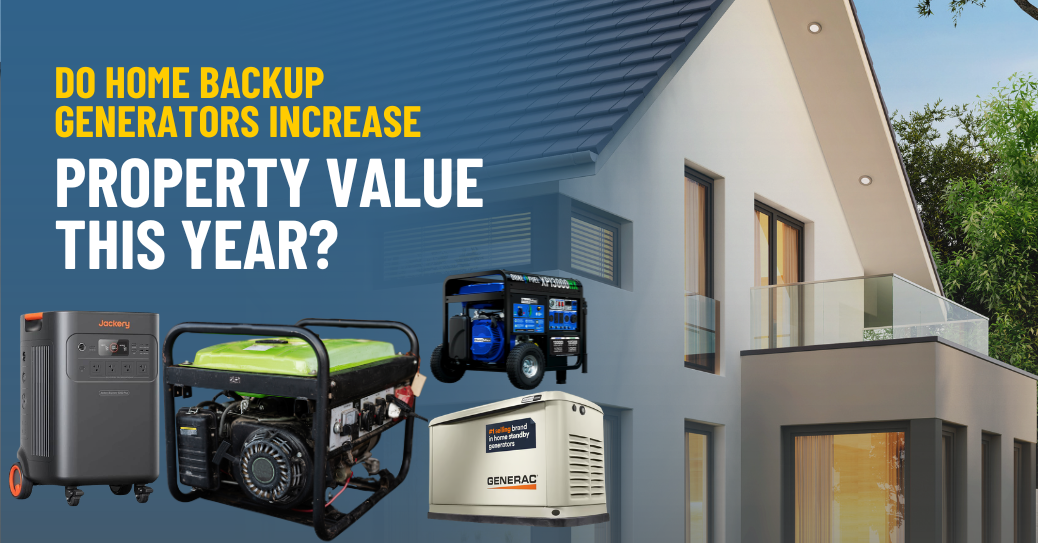
Power outages hit harder every year. Storms knock out grids for days, not hours. Homeowners now ask a sharper question: Do Home Backup Generators Increase Property Value this year? The short answer is yes, in most markets. However, the actual value added depends on location, generator type, installation quality, and buyer expectations. This guide breaks down the data, costs, and the return homeowners can realistically expect from adding a backup generator.
Quick Answer: How Much Value Does a Generator Add?
A whole-house standby generator typically raises home value by 3% to 5%. On a $400,000 home, that translates to $12,000 to $20,000 in added resale value. Real estate agents and appraisers across the country back this range. Portable generators, by contrast, add almost nothing to appraised value. They count as personal property, not a fixed home improvement. Buyers still like seeing one included, but it rarely moves the sale price.
The table below summarizes the value impact by generator type.
| Generator Type | Typical Value Boost | Counted as Fixed Asset? | Buyer Appeal |
|---|---|---|---|
| Whole-house standby | 3% to 5% | Yes | High |
| Portable generator | Near 0% | No | Moderate |
| Solar + battery backup | 2% to 4% | Yes | Growing fast |
| Manual transfer switch only | Minimal | Partial | Low |
Why Power Outages Are Driving This Trend
Grid reliability keeps slipping across the United States, making backup power a growing consideration for homeowners. U.S. electricity customers experienced about 11 hours of power interruptions on average in 2024, nearly double the decade average of roughly six hours per year. Hurricanes accounted for a major share of those lost hours, with storms like Helene and Milton contributing to widespread outages. For homeowners in high-risk areas, investing in reliable backup power solutions is becoming less of a luxury and more of a home resilience upgrade. In regions facing wildfire threats and planned shutoffs, choosing the best generator for California wildfires and power outages can help protect essential home systems during emergencies.
Major weather events alone averaged nearly nine hours of outage time in 2024, compared with just under four hours per year from 2014 through 2023. Even routine, non-storm interruptions still account for around two hours of outages annually, creating ongoing demand for dependable home energy solutions. A professionally installed home backup generator can provide added convenience, improve energy security, and become an attractive feature for buyers looking for homes prepared for unexpected outages.
Some states experience these challenges far more than others. South Carolina customers faced nearly 53 hours without power in 2024, while North Carolina and Florida also dealt with major storm-related disruptions. Meanwhile, states such as Arizona and Massachusetts saw fewer than two hours of interruptions on average. Because outage risk varies by location, homeowners in areas with frequent storms, wildfires, or unreliable grids may see stronger buyer interest and potentially greater value from installing a backup generator before selling their property.
This table shows the shift in national outage duration over recent years.
| Year | Average U.S. Outage Duration (Hours) | Primary Driver |
|---|---|---|
| 2022 | 5.5 | Fewer major storm events |
| 2023 | 6.1 | Routine grid interruptions |
| 2024 | 11.0 | Hurricanes Helene, Milton, Beryl |
| 2014–2023 average | ~4.0 (major events only) | Mixed weather patterns |
When outages stretch into days, a generator stops being a luxury. It becomes a basic expectation for many buyers.
Why Buyers Pay More for Homes With Standby Power
Buyers today think differently about backup power than buyers did a decade ago. More people work from home now. A dead internet connection means lost income, not just inconvenience. Home-based businesses cannot tolerate a two-day blackout.
Consumer Reports data shows nearly 70% of new home shoppers weigh backup power in outage-prone regions. That number keeps climbing as extreme weather becomes routine news. Buyers see a standby generator and read it as a signal. It tells them the home protects its systems and its occupants.
Generators also protect other investments inside the house. Sump pumps keep basements dry during storms. HVAC systems avoid strain from sudden restarts. Refrigerators and freezers keep food safe during multi-day outages. Security systems and medical equipment stay online when it matters most. All of this reduces a buyer’s perceived risk before they even make an offer.
Homes with standby systems also tend to sell faster. Listings that mention “whole-house generator” draw more clicks and more showings. Agents report stronger buyer interest in these listings during storm season. Speed and price often move together in competitive housing markets.
Standby vs. Portable Generators: The Value Gap
Not all generators carry equal weight with appraisers. This distinction matters more than most homeowners realize before they buy.
| Feature | Standby Generator | Portable Generator |
|---|---|---|
| Installation | Permanently wired, fixed | Not installed, movable |
| Fuel source | Natural gas or propane | Gasoline or diesel |
| Activation | Automatic within seconds | Manual startup required |
| Appraisal impact | Counted as fixed improvement | Excluded from appraisal |
| Typical cost | $7,000 to $15,000 installed | $500 to $3,000 |
| Resale ROI | Up to 150% in strong markets | Near 0%, moves with owner |
Appraisers only assign value to permanent fixtures attached to the property. A portable unit leaves with the seller, just like a lawn mower or a grill. If resale value matters to you, the standby option is the one that counts.
What a Whole-House Generator Actually Costs
Installation costs vary based on home size, generator capacity, and local labor rates. Most homeowners spend between $7,000 and $15,000 for a fully installed system. Smaller units for partial home coverage start closer to $3,000. Larger systems built for full-house power can exceed $20,000 in some regions.
| Home Size | Generator Size (kW) | Estimated Installed Cost |
|---|---|---|
| Under 2,000 sq ft | 10–14 kW | $7,000–$9,500 |
| 2,000–3,500 sq ft | 16–20 kW | $9,500–$13,000 |
| 3,500+ sq ft | 22–26 kW | $13,000–$18,000 |
| Large estate / full coverage | 30+ kW | $18,000–$25,000+ |
Fuel type also affects total cost. Natural gas units connect directly to existing gas lines and need no separate tank. Propane systems require a storage tank, which adds installation expense upfront. Both options run reliably once properly installed and maintained.
Calculating the Real Return on Investment
The math behind generator ROI depends heavily on your home’s price point. A 3% to 5% value increase only pays off when the home price supports it.
Take a $350,000 home as an example. A 4% value increase adds roughly $14,000 to the resale price. If installation cost $10,000, that’s a 140% return before you even sell. On a $200,000 home, that same percentage adds only $8,000. The math still works, but the margin shrinks.
Some studies report even stronger returns. Homes with backup generators have shown ROI between 50% and 75% in certain markets, with top performers reaching 150%. Location, generator size, and buyer priorities all shift that number up or down. A generator in a hurricane zone almost always outperforms one in a mild climate.
Here’s a simplified breakdown of expected returns by price bracket.
| Home Value | Estimated Value Increase (4%) | Typical Install Cost | Approx. ROI |
|---|---|---|---|
| $200,000 | $8,000 | $8,500 | ~94% |
| $350,000 | $14,000 | $10,000 | ~140% |
| $500,000 | $20,000 | $12,000 | ~166% |
| $750,000 | $30,000 | $15,000 | ~200% |
Higher-value homes tend to see stronger dollar returns from the same percentage increase.
Regional Differences Matter More Than the Generator Itself
A generator’s value depends heavily on where the home sits. Buyers in hurricane-prone states actively search for homes with backup power already installed. Florida, Louisiana, Texas, and the Carolinas top that list. Homeowners in these areas often consider solutions like a backup generator for Florida hurricane season because storms can create extended outages and increase the demand for homes with reliable emergency power.
Winter storm zones like Michigan and the Northeast see similar demand spikes.
Buyers in areas with stable grids view generators differently. They see a nice convenience feature, not a must-have. The value bump still exists but tends to sit at the lower end of the 3% to 5% range. Rural areas with older infrastructure also see stronger generator demand than dense urban markets with modern grids.
Climate risk keeps expanding into new regions too. Wildfire-driven shutoffs now affect parts of California that rarely lost power before. Buyers in these newer risk zones increasingly ask agents about backup power during showings.
Factors That Push Generator ROI Higher
Several details determine whether your generator delivers a strong return at resale. Age matters first. Units under five years old with a transferable warranty attract stronger buyer interest. Older units without documentation raise questions during inspection.
Fuel source matters too. Natural gas systems appeal to buyers who want zero tank maintenance. Propane systems still work well but require occasional refills and monitoring.
Capacity affects buyer perception directly. A generator that only powers a few circuits reads as a partial solution. A system sized for the whole house reads as complete protection. Buyers notice this difference during a walkthrough.
Proper permitting and code compliance protect your investment as well. Installations that meet National Fire Protection Association standards pass inspection smoothly. Unpermitted installations can create delays or renegotiations during closing.
What Realtors and Appraisers Actually Say
Real estate professionals consistently point to the same range across markets. Agents at major brokerages estimate a 3% to 5% value increase for standby systems. Appraisers rely on comparable sales data to justify that bump during formal valuations. Without recent comps showing generator-equipped sales, appraisers may value the improvement conservatively.
This is where local market knowledge helps most. An agent familiar with your neighborhood can pull comps showing real generator-driven price differences. That data strengthens your listing price and supports negotiations with buyers.
Is Installing a Generator Worth It for Resale Alone?
Resale value shouldn’t be the only reason to install a generator. The system pays you back long before you ever list the house. It protects food, medication, and sensitive electronics during outages. It keeps sump pumps running during storms that flood basements fast. It lets you work from home without losing income during a blackout.
Think of resale value as a bonus on top of daily protection. Homeowners in storm-prone areas often say the peace of mind alone justifies the cost. The resale bump simply confirms that buyers agree with that logic.
Frequently Asked Questions
Does a portable generator increase home value at all? No, portable generators add little to no appraised value. They count as personal property, not a home improvement, since they aren’t permanently installed.
How much does a standby generator raise home value? Most industry data points to a 3% to 5% increase in home value. The exact number depends on location, home price, and local outage frequency.
Do appraisers count generators as a home improvement? Yes, but only permanently installed standby systems qualify. Appraisers exclude portable units since they can leave with the seller at any time.
Which states see the biggest generator value boost? Hurricane and storm-prone states show the strongest demand. Florida, Louisiana, Texas, the Carolinas, and parts of Michigan lead this trend.
How long does it take to recoup generator installation costs? Many homeowners recoup 100% to 150% of installation costs at resale. Actual timing depends on when you sell and local market conditions.
Is natural gas or propane better for resale value? Both fuel types add similar resale value when properly installed. Natural gas offers more convenience since it skips tank refills entirely.
Final Words
Backup generators earn their cost twice over. They protect your home today and raise its price tomorrow. The 3% to 5% value increase holds steady across most housing markets nationwide. That number climbs higher in storm-prone regions where outages last for days. It settles lower in areas with stable, modern power grids.
Standby systems win this comparison every time over portable units. Permanent installation, proper permitting, and the right fuel source all strengthen your return. Power outages aren’t slowing down anytime soon based on recent grid data. A generator turns that growing risk into a selling point instead of a liability.


 Get survival, travelling and auto tips, follow new technology trends, entertainment stories and world events with PeekTimes.