


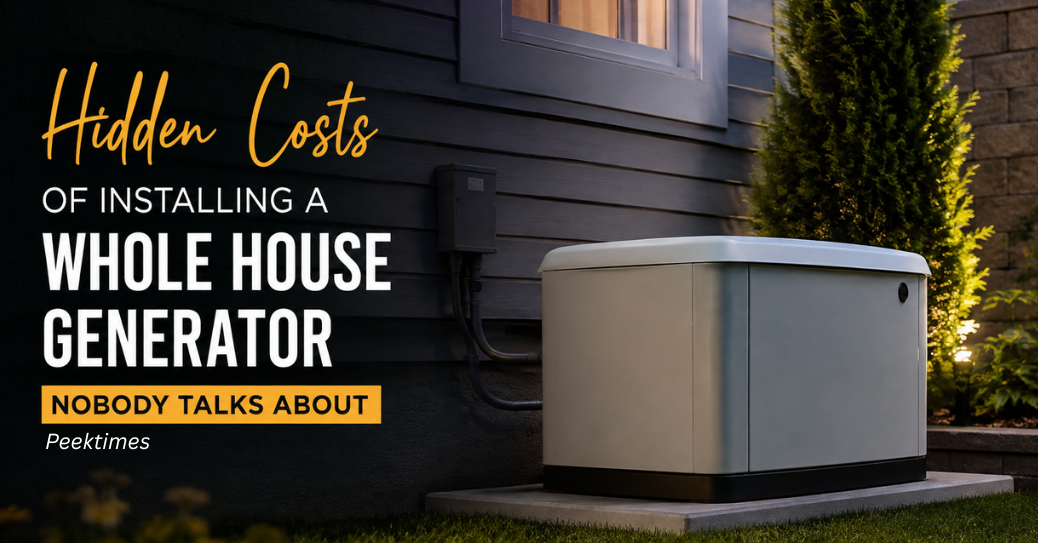
Power outages hit harder every year. Storms knock out the grid for days. Homeowners rush to buy a whole house generator for backup power. Sales brochures show one number: the sticker price. That number hides the real story behind the Hidden Costs of Installing a Whole House Generator Nobody Talks About.
This guide breaks down the hidden costs of whole house generator installation. It covers permits, fuel lines, panel upgrades, insurance, maintenance contracts, and resale value. Read this before you sign a contract with any generator installer. Understanding these unexpected expenses can help you plan your budget, avoid surprises, and make a smarter decision before investing in backup power.
The Sticker Price Is Just the Starting Point
Most homeowners search “whole house generator cost” and find a clean number. Angi lists the national average around $5,160 for installation alone. HomeGuide pegs a fully installed system between $6,000 and $11,000. Other 2026 estimates run as high as $15,000 to $20,000 for larger homes.
None of these numbers include every line item. A standby generator system involves the unit, a concrete pad, an automatic transfer switch, gas or propane hookup, electrical wiring, permits, and inspection fees. Each piece adds cost that many quotes leave out until the final invoice.
| Cost Component | Typical Range (2026) |
|---|---|
| Generator unit (13kW–22kW) | $2,000 – $8,000 |
| Installation labor | $1,500 – $5,000 |
| Automatic transfer switch | $500 – $1,500 |
| Concrete pad | $300 – $600 |
| Gas line installation | $500 – $2,000 |
| Propane tank (if needed) | $400 – $2,500 |
| Permits and inspection | $100 – $600 |
| Electrical panel upgrade | $500 – $2,000 |
Add these together and a “budget” 13kW system quickly climbs past $10,000. A larger 22kW unit for a bigger home often lands between $14,000 and $25,000 fully installed.
Hidden Cost #1: Electrical Panel Upgrades
Older homes rarely have panels built for a standby generator. A licensed electrician often finds a panel that cannot handle the new load. This forces a panel upgrade nobody budgeted for.
Panel upgrades add $500 to $2,000 to the project. Homes with 40-year-old electrical systems face even higher costs. Knob-and-tube wiring or a fuse box instead of breakers raises that number further.
This cost surfaces only after a technician inspects the home. Many quotes exclude it entirely. Ask your installer for a full electrical assessment before signing anything.
Hidden Cost #2: Gas Line and Fuel Setup
Natural gas generators need a dedicated gas line sized for continuous high demand. Gas line installation costs $15 to $50 per linear foot. Homes far from the meter face steep trenching costs.
Propane-powered systems need a tank if the home lacks one. Propane tanks cost $400 to $1,800 depending on size. Larger buried tanks for bigger generators push costs toward $2,500.
Fuel cost itself is ongoing, not one-time. A 15kW to 20kW generator burns $90 to $220 per day during extended outages. Propane costs more per hour than natural gas in most regions.
Hidden Cost #3: Site Preparation and Trenching
The generator needs level ground and a concrete or composite pad. That pad costs $300 to $600 on its own. Sloped yards or rocky soil raise excavation costs significantly.
Trenching for gas lines or electrical conduit runs $10 to $25 per foot in normal soil. Rocky terrain or long distances between the meter and generator can double that price. Some rural properties pay $5,000 or more just for extended trenching.
Landscaping restoration after trenching is another cost many installers skip mentioning. Sod repair, mulch replacement, and driveway patching add several hundred dollars more.
Hidden Cost #4: Permits, Inspections, and Code Compliance
Almost every municipality requires a permit for standby generator installation. Permit fees run $100 to $600 depending on location. Some counties charge separate fees for electrical and gas work.
Code compliance adds friction too. Local zoning may require the generator sit a minimum distance from windows, property lines, or fences. Homes that fail this setback rule need custom placement, which raises labor cost.
Skipping permits saves money upfront but creates massive risk later. Unpermitted work can void insurance claims and complicate a home sale. Always confirm your contractor pulls proper permits.
Hidden Cost #5: Annual Maintenance Contracts
A whole house generator is a mechanical engine, not a set-and-forget appliance. It needs oil changes, filter replacements, battery checks, and load bank testing every year. Skipping this maintenance risks total failure during an actual outage.
Angi reports average annual maintenance costs between $171 and $395, with some homeowners paying $600 for full-service plans. Dealer maintenance contracts from brands like Kohler or Generac often run $375 to $500 per year.
| Maintenance Item | Typical Annual Cost |
|---|---|
| Basic tune-up service | $150 – $300 |
| Dealer maintenance contract | $375 – $500 |
| Battery replacement (every 2-3 years) | $150 – $300 |
| Oil and filter change | $50 – $150 |
| Load bank testing | $100 – $250 |
Over a 20-year lifespan, maintenance alone adds $4,000 to $10,000 to total ownership cost. Few buyers factor this into their initial budget decision.
Hidden Cost #6: Repairs and Part Replacement
Standby generators run for 15 to 30 years with proper care, according to industry data from HomeGuide. That lifespan assumes consistent maintenance and no major failures. Reality often looks different.
Batteries fail every two to three years and need replacement. Voltage regulators, control boards, and starter motors wear out over time. A single control board replacement can cost $500 to $1,500 depending on the generator model.
Homeowners in coastal or humid climates see faster corrosion on enclosures and wiring. Salt air shortens component lifespan and increases repair frequency. Budget an extra buffer if you live near the coast.
Hidden Cost #7: Insurance and Liability Changes
Some homeowners assume a generator automatically lowers insurance risk. That assumption is only partly true. Standby generators can raise liability exposure from carbon monoxide risk, fuel storage, and fire hazard.
Standard homeowners insurance typically covers generator damage from a covered event like lightning or fire. Mechanical breakdown usually needs a separate equipment breakdown endorsement. This add-on costs extra on your annual premium.
Homes with propane tanks may also see a modest premium increase. Insurers view stored fuel as added risk. Call your insurance agent before installation to confirm coverage gaps.
Hidden Cost #8: Property Tax Reassessment
A whole house generator counts as a permanent home improvement in most jurisdictions. Permanent improvements can trigger a property tax reassessment. Assessors may add the generator’s value to your home’s taxable base.
This increase is usually small compared to installation cost. Still, it adds a recurring annual expense that most buyers never anticipate. Check with your local assessor’s office to understand local rules.
Hidden Cost #9: Financing Interest and Fees
Many homeowners finance a $10,000 to $15,000 generator system rather than pay cash. Financing spreads cost over 48 to 60 months through dealer programs or personal loans. That convenience comes with interest.
A $12,000 system financed over 48 months can cost $250 to $300 per month. Total interest paid over the loan term can add $1,000 to $3,000 to the real cost. Compare loan terms carefully before committing.
Hidden Cost #10: Noise, Neighbor Complaints, and HOA Fines
Standby generators run a self-test cycle weekly for 20 to 30 minutes. They also run loudly during actual power outages. Some homeowners associations restrict generator placement or require sound barriers.
Non-compliant installations can trigger HOA fines or forced relocation of the unit. Moving an installed generator after the fact costs far more than proper placement from day one. Always check HOA rules before installation begins.
Full Cost Comparison Table
| Category | Advertised Cost | Real Total Cost Range |
|---|---|---|
| Generator unit only | $2,000 – $8,000 | Same |
| “Installed” price quoted by sales rep | $5,000 – $11,000 | $8,000 – $20,000+ |
| Annual operating cost | Rarely mentioned | $200 – $1,500/year |
| 10-year total ownership cost | Rarely calculated | $15,000 – $35,000+ |
| 20-year total ownership cost | Never calculated | $25,000 – $50,000+ |
How to Avoid Hidden Costs
Get a full home energy assessment before requesting quotes. This reveals panel capacity, gas line distance, and site conditions upfront. Ask every contractor for a written, itemized quote covering every line item above.
Request references from customers with similar-sized homes and similar terrain. Confirm permit costs, maintenance contract pricing, and warranty terms in writing. Compare at least three quotes from licensed, insured installers before choosing one.
Ask your insurance agent about equipment breakdown coverage before installation. Check HOA rules and local zoning setbacks early in the process. Budget an extra 20 to 30 percent above the initial quote for surprises.
Frequently Asked Questions
What is the true cost of a whole house generator over 20 years? Total ownership cost, including installation, fuel, maintenance, and repairs, typically runs $25,000 to $50,000 over two decades for a mid-size home.
Do whole house generators increase home insurance rates? Some policies see modest premium increases, especially with propane storage. Mechanical breakdown coverage usually requires a separate endorsement at extra cost.
How much does annual generator maintenance really cost? Expect $200 to $500 per year for a professional service contract, based on 2026 industry data from Angi and HomeGuide.
Does a whole house generator raise property taxes? In many jurisdictions, yes. Assessors treat it as a permanent home improvement and may adjust your taxable home value.
Can I skip the maintenance contract to save money? Skipping maintenance voids most manufacturer warranties. It also raises the risk of failure during an actual outage, defeating the purpose of the investment.
Is natural gas cheaper than propane for a standby generator? Yes, natural gas generally costs less per hour to run than propane. Natural gas also never requires refilling like a propane tank does.
How long does a whole house generator actually last? Well-maintained standby generators last 15 to 30 years, according to HomeGuide’s 2026 cost data, depending on brand and climate.
Final Words
A whole house generator delivers real peace of mind during outages. It protects food, medical equipment, and home comfort when the grid fails. That value is real and worth considering seriously.
The hidden costs above do not mean skip the purchase. They mean budget honestly before you commit. Ask hard questions, get itemized quotes, and plan for 20 years of ownership, not just day one.
Homeowners who research every cost avoid nasty surprises later. They negotiate better deals and choose the right generator size the first time. Informed buyers save thousands over the life of their system.


 Get survival, travelling and auto tips, follow new technology trends, entertainment stories and world events with PeekTimes.