


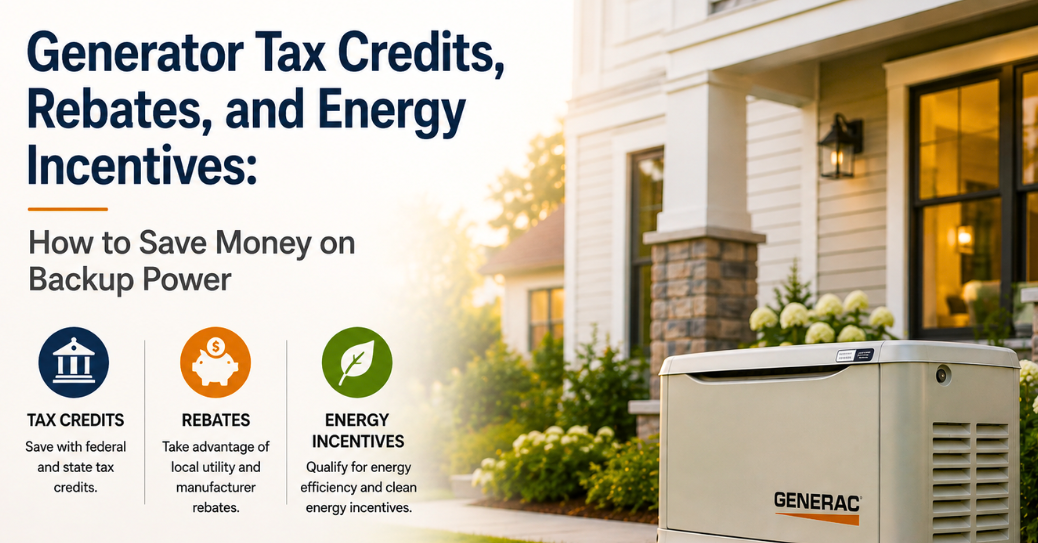
Backup power costs real money, and most homeowners want to know one thing first. Can a tax credit or rebate soften that bill? The honest answer changed in 2026, and it changed fast. This guide walks through exactly which generator tax credits still exist, which rebates remain active, and which incentives quietly expired. You get real numbers, real program names, and a clear path to actual savings.
The Big Change: Federal Tax Credits for Generators Just Ended
Homeowners searching for a generator tax credit in 2026 run into one hard fact immediately. The two major federal credits that used to apply expired at the end of 2025. The Residential Clean Energy Credit under Section 25D and the Energy Efficient Home Improvement Credit under Section 25C both ended. Both were terminated by the One Big Beautiful Bill Act, which shortened their original timeline through 2032.
The Section 25C credit once covered a wide range of upgrades. It applied to insulation, air sealing, exterior windows, doors, and qualifying HVAC systems. That credit is no longer available for anything placed in service after December 31, 2025. Only projects completed and installed by that deadline still qualify for the old 30 percent rate.
The Section 25D credit covered solar panels, solar battery storage, and other clean energy property. It also expired after December 31, 2025, cutting off what had been one of the most generous federal incentives in U.S. history. This timeline moved up years earlier than most taxpayers expected.
Quick fact: The federal government has terminated Section 25C and 25D tax credits for any property placed in service after December 31, 2025. There is no federal tax credit for residential energy improvements in 2026.
Does Any Federal Tax Credit Still Apply to Standby Generators?
Traditional fuel-powered standby generators never qualified for the clean energy credit in the first place. They run on natural gas, propane, or diesel, not renewable sources. This means most homeowners buying a Generac or Kohler unit today get zero federal credit either way.
Three narrow exceptions still exist. The IRS permits partial deductions for generators tied to documented medical necessity, exclusive business use, or active rental property operations. Even within these categories, the deduction usually applies only to the business or medical-use portion of the cost. A homeowner buying a generator purely for storm protection will not qualify under any of these three paths.
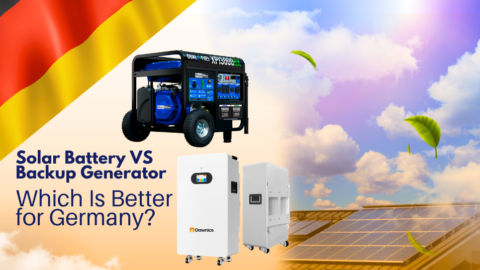
Solar-powered generators and battery systems get treated more favorably under current law, even without Section 25D. Commercial and business-use solar property can still access other tax provisions through 2026, which keeps solar backup more tax-advantaged than fossil-fuel standby units. Homeowners weighing that decision should read this direct comparison of a solar battery vs backup generator system before choosing a fuel type.
What This Means for Your 2026 Tax Return
If you installed a qualifying generator or solar battery system by December 31, 2025, you can still claim the credit on your 2025 return. If your installation happens anytime in 2026, the federal credit path is closed for most residential buyers. Save every invoice anyway, since state and utility programs still require the same documentation.
Federal Credit Comparison: Before and After 2026
| Credit | Status Through 2025 | Status in 2026 |
|---|---|---|
| Section 25C (Energy Efficient Home Improvement Credit) | 30% credit, up to $3,200 annual cap | Expired, not available |
| Section 25D (Residential Clean Energy Credit) | 30% credit, no annual cap, covered solar and battery storage | Expired, not available |
| Standby fuel generator deduction | Never eligible under 25C or 25D | Still limited to medical, business, or rental use only |
| Section 179D (commercial buildings) | Active | Expires after June 30, 2026 |
State and Utility Rebates: Where the Real Savings Live Now
Federal tax credits closed one door, but state and utility rebate programs remain open in most regions. These programs come from IRA funding that Congress already allocated to state energy offices. Two major programs still operate nationwide: the Home Efficiency Rebates program, known as HOMES, and the Home Electrification and Appliance Rebates program, known as HEAR or HEEHRA.
The HOMES program funds whole-home efficiency projects and can pay homeowners between $2,000 and $8,000 depending on income and energy savings achieved. The HEAR program targets electrification upgrades, including heat pump systems, electrical panel upgrades, and wiring improvements, with a combined household cap around $14,000 for lower-income applicants.
These programs roll out state by state, and rollout speed varies enormously. As of mid-2026, twelve states and the District of Columbia have launched active rebate programs, while others remain in development. South Carolina, for example, expects its program to launch sometime in 2026, with projected rebates between $2,000 and $16,000 depending on household income and savings level.
State Rebate Snapshot for 2026
| State/Program | Rebate Range | Status |
|---|---|---|
| South Carolina HOMES/HEAR | $2,000 – $16,000 | Expected launch in 2026 |
| Massachusetts (Mass Save) | $1,250 – $10,000+ | Active, one of the most generous utility programs nationwide |
| National HOMES Program | $2,000 – $8,000 | Active in participating states |
| National HEAR Program | Up to $14,000 combined | Active, income-based tiers |
These state programs focus primarily on efficiency and electrification, not backup generators directly. Still, homeowners bundling an electrical panel upgrade with a new standby generator installation can often apply panel-related rebates toward the same overall project.
Utility-Specific Generator Rebates: The Overlooked Savings
Some electric utilities offer direct rebates specifically for backup generators and battery systems, especially in wildfire-prone service areas. Pacific Gas and Electric runs one of the most notable examples in the country right now. PG&E offers rebates of $300 to $500 on qualifying portable generators and batteries through December 31, 2026.
Standard PG&E rebates run $300 per account, with an additional $200 available for customers enrolled in assistance programs like CARE or FERA. Eligibility requires an active residential or business account and a home located in a high fire-risk zone or an area served by enhanced powerline safety settings. Applications must arrive within 12 months of purchase.
California homeowners facing frequent shutoffs should combine this rebate research with practical generator sizing. This detailed guide on the best generator for California wildfires and power outages explains which units qualify and perform best in those exact conditions.
Utilities in hurricane-prone states run similar, though less publicized, programs. Homeowners in Florida should check with their local co-op or investor-owned utility before buying, since some offer quiet rebates tied to storm hardening initiatives. This resource on choosing a backup generator for Florida hurricane season covers regional sizing and installation requirements that often overlap with rebate eligibility.
Insurance Discounts: A Different Kind of Incentive
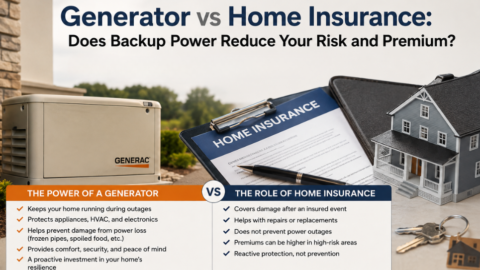
Tax credits and rebates are not the only financial incentive tied to backup power. Many home insurance carriers reduce premiums for homeowners with permanently installed standby generators. These discounts typically run 5 percent to 10 percent, depending on the carrier and the fuel type.
This incentive works differently than a rebate. It pays out gradually every year you keep the policy active, rather than as a single upfront credit. For a full breakdown of how this discount works, which carriers offer it, and which generator types actually qualify, read this detailed comparison of generator vs home insurance backup power risk.
How to Stack Every Available Incentive
Smart homeowners combine multiple programs instead of relying on just one. Start with your state HOMES or HEAR application if your state has an active program. Layer any utility-specific generator or battery rebate on top of that. Finally, confirm your insurance discount eligibility once installation finishes.
| Step | Action | Potential Savings |
|---|---|---|
| 1 | Check state HOMES/HEAR eligibility | $2,000 – $14,000 |
| 2 | Apply for utility generator or battery rebate | $300 – $500 (varies by utility) |
| 3 | Confirm home insurance generator discount | 5% – 10% off annual premium |
| 4 | Check business or rental property deduction eligibility | Partial deduction, case specific |
Stacking these programs rarely offsets the entire purchase price. It does meaningfully lower the net cost over the first several years of ownership, especially when paired with reduced claim risk during outages.
Generator Costs vs Available Incentives in 2026
Understanding real installed costs helps homeowners judge whether available incentives make a meaningful dent. A whole-home standby generator typically costs between $8,000 and $16,000 installed, depending on system size and site complexity. Smaller portable units and battery systems cost far less upfront but offer less total household coverage.
| System Type | Typical Installed Cost | Best Available Incentive Path |
|---|---|---|
| Whole-home standby generator (14kW-22kW) | $8,000 – $16,000 | Insurance discount, limited utility rebate |
| Portable generator | $800 – $2,500 | Utility rebate (where offered), no insurance discount |
| Solar battery backup system | $10,000 – $20,000+ | State HOMES/HEAR rebate, possible business tax deduction |
Homeowners in colder climates face different installation requirements that can affect total project cost and rebate eligibility. This roundup of the best standby generators for German homes covers cold-weather reliability standards that also apply across many northern U.S. regions.
Does a Generator Increase Home Value Alongside These Savings?
Financial incentives are not the only return on this investment. A properly installed standby generator often raises resale value in storm-prone markets. Buyers increasingly treat backup power as a near-essential feature rather than a luxury add-on.
This detailed analysis on whether home backup generators increase property value this year breaks down appraisal trends and buyer demand data across multiple regions. Combined with rebates and insurance discounts, this added resale value strengthens the overall financial case for a standby system.
Smart Home Integration and Future Incentive Trends
Utilities increasingly tie rebate eligibility to smart, connected backup systems rather than standalone units. Programs favor generators and batteries that integrate with demand-response technology and smart thermostats. This shift rewards homeowners who plan ahead for full-home automation.
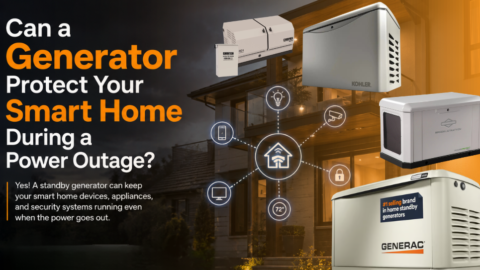
Homeowners considering this kind of setup should review how a generator protects your smart home during a power outage, since future utility incentive programs will likely expand around this exact integration model.
Common Mistakes That Cost Homeowners Their Rebate
Many applicants lose eligibility through avoidable paperwork errors. Missing installation deadlines remains the most common mistake across every program type. Utilities and state agencies enforce strict windows, often just 12 months from purchase date.
Skipping professional installation causes a second common failure point. Most rebate and insurance programs require licensed electrician work with a proper transfer switch. Homeowners who self-install a system, even correctly, frequently find themselves disqualified from every financial incentive listed above.
Failing to confirm program status before purchase causes a third frequent issue. Some homeowners buy equipment assuming a rebate exists, only to discover their state program has not launched yet. Always verify current status directly with your state energy office or utility before finalizing any purchase.
Frequently Asked Questions
Is there still a federal tax credit for home generators in 2026?
No. Sections 25C and 25D expired after December 31, 2025. Only narrow medical, business, or rental-use deductions may still apply.
Can I still claim a credit if I installed my generator in 2025?
Yes. Projects placed in service by December 31, 2025, still qualify for the applicable credit on your 2025 tax return.
Do state rebate programs cover standby generators directly?
Most state HOMES and HEAR programs target efficiency and electrification upgrades rather than generators specifically, though some utility programs do offer direct generator rebates.
Which utility offers the best current generator rebate?
PG&E currently offers one of the most visible programs, providing $300 to $500 rebates on qualifying generators and batteries through December 31, 2026.
Does a home insurance discount count as a rebate?
No, but it functions as an ongoing financial incentive. Many carriers reduce premiums by 5 percent to 10 percent for permanently installed standby generators.
Final Words
The federal tax credit era for home generators effectively closed at the end of 2025. That does not mean the savings disappeared entirely. State rebate programs, utility-specific incentives, and insurance discounts still offer real, stackable value in 2026. The homeowners who save the most take time to check every layer before buying. Confirm your state’s HOMES and HEAR status. Call your utility about generator-specific rebates. Ask your insurance agent about the standby generator discount. None of these programs alone will cover your full investment, but together they meaningfully lower the true cost of reliable backup power.




 Get survival, travelling and auto tips, follow new technology trends, entertainment stories and world events with PeekTimes.