


California residents know the drill by now. The wind picks up, the humidity drops, and the power goes out. Utilities call it a Public Safety Power Shutoff, or PSPS. Families call it a nightmare. In 2025 alone, over 425,000 customers lost power in a single Southern California wind event, according to poweroutage.us. Southern California Edison alone shut off power to more than 166,000 customers during that stretch. This is not a rare event anymore. It is the new normal for anyone living in a high fire-risk zone.
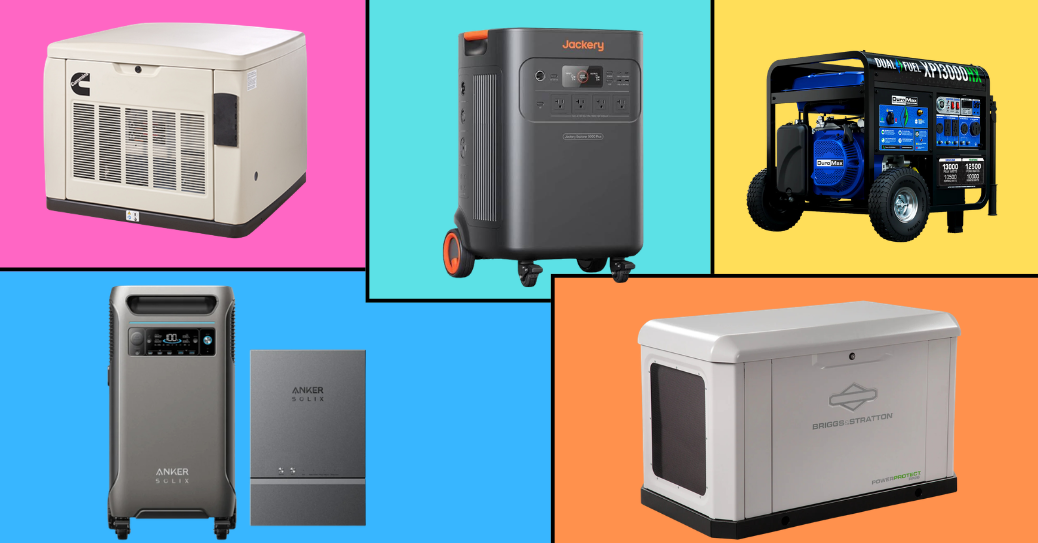
That is why choosing the Best Generator for California Wildfires and Power Outages has become a priority for many homeowners. A reliable backup generator now ranks as essential home equipment, right next to smoke detectors and fire extinguishers. This guide breaks down the five best generators for California wildfire season and power outages. Each option fits a different budget, home size, and power need. We cover specs, pricing, pros, cons, and real-world performance data to help California residents stay prepared during wildfire emergencies and unexpected outages.
Why California Needs Backup Power More Than Ever
California’s wildfire season no longer follows a predictable calendar. It can stretch from late spring through early winter, with extreme weather conditions increasing the risk of dangerous fires and power outages. Utilities such as PG&E, SCE, and SDG&E may implement Public Safety Power Shutoff (PSPS) events when strong winds, low humidity, and dry vegetation create hazardous wildfire conditions. Similar to how homeowners in Florida prepare for hurricane-related outages with backup power solutions, California residents are increasingly turning to generators to maintain electricity during emergency shutdowns and wildfire threats. These proactive measures help reduce risks while highlighting the growing need for reliable backup power during extreme weather events.
The numbers tell a bigger story. In 2024, California recorded 8,110 wildfires that burned over 1 million acres and destroyed 1,837 structures. That total marked the highest acreage burned since 2021. Then January 2025 delivered the devastating Eaton Fire in Altadena, which forced more than 100,000 evacuations and left over 425,000 customers without power during a single outage event. PG&E’s 2025 season data estimates that de-energization prevented more than 146,000 additional acres from burning.
California PSPS and Wildfire Data Snapshot
| Metric | Data Point |
|---|---|
| 2024 total wildfires statewide | 8,110 fires |
| 2024 total acres burned | 1,077,711 acres |
| 2024 structures destroyed | 1,837 structures |
| January 2025 single-event outage peak | 425,000+ customers |
| SCE customers under PSPS (Jan 2025 event) | 166,737 customers |
| PG&E estimated wildfire risk reduction during PSPS | ~95% |
| PG&E 2025 acreage protected via PSPS | 146,000+ acres |
These numbers explain why more homeowners now search for the best whole house generator for California. A single outage can last anywhere from a few hours to several days. Historical PG&E data shows average PSPS restoration times ranging from 10 to 17 hours, but some rural circuits stay dark much longer. Planning around “a few hours” is no longer realistic.
What to Look for in a Wildfire-Ready Generator
California residents know the drill by now. The wind picks up, the humidity drops, and the power goes out. Utilities call it a Public Safety Power Shutoff, or PSPS. Families call it a nightmare. In 2025 alone, over 425,000 customers lost power in a single Southern California wind event, according to poweroutage.us. Southern California Edison alone shut off power to more than 166,000 customers during that stretch. This is not a rare event anymore. It is the new normal for anyone living in a high fire-risk zone.
That is why choosing the Best Generator for California Wildfires and Power Outages has become a priority for many homeowners. A reliable backup generator now ranks as essential home equipment, right next to smoke detectors and fire extinguishers. This guide breaks down the five best generators for California wildfire season and power outages. Each option fits a different budget, home size, and power need. We cover specs, pricing, pros, cons, and real-world performance data to help California residents stay prepared during wildfire emergencies and unexpected outages.
California power outages caused by wildfire prevention measures often come with advance warning but uncertain duration. This changes the way homeowners should prioritize their generator choices. Fuel type matters first. Propane and natural gas generators run cleaner and allow safer long-term fuel storage. Dual-fuel and tri-fuel portable generators provide added flexibility when gas stations run dry during evacuations. Battery-based power stations eliminate fuel storage completely, which can be an important advantage in fire-prone areas where storing flammable fuel creates additional concerns.
Power capacity matters just as much when selecting the right backup system. A whole-house standby generator needs enough kilowatts to handle major appliances like HVAC systems, well pumps, refrigerators, and medical equipment at the same time. Portable generators are better suited for powering essential circuits, while battery power stations fall somewhere in between depending on their battery capacity and expansion options.
Noise levels, runtime, installation requirements, permitting rules, and California emissions compliance should also be part of the buying checklist. CARB compliance is essential for any combustion-powered generator sold or operated in California, ensuring the unit meets the state’s strict air quality standards.
The 5 Best Generators for California Wildfires and Power Outages
Each generator below serves a distinct type of buyer. Read through the specs and match your home size, budget, and power needs to the right pick.
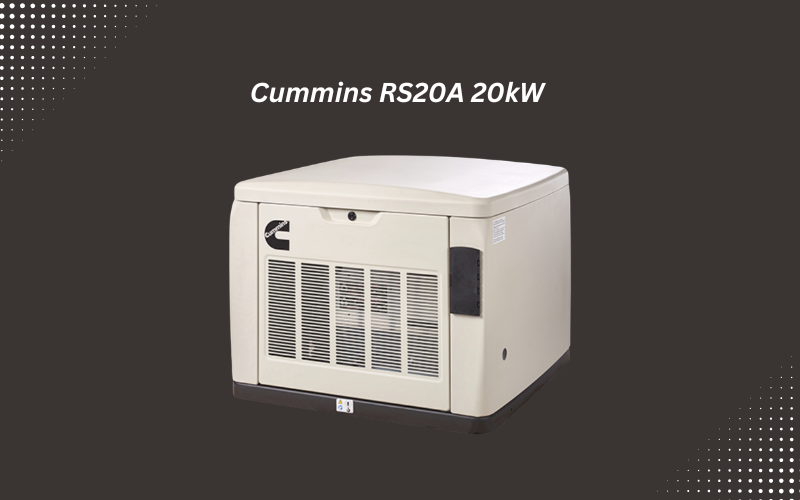
1. Cummins RS20A 20kW
The Cummins RS20A stands out as the top pick for homeowners who want true whole-home coverage without constant babysitting. This natural gas or propane standby unit installs permanently outside the home and starts automatically within seconds of a PSPS-triggered outage. No manual setup, no fuel runs, no waiting in the dark.
The RS20A pairs with an automatic transfer switch, so the transition from grid power to generator power happens instantly. Homeowners with central air conditioning, well pumps, or home medical equipment benefit most from this seamless switch. Cummins backs the unit with a strong warranty and a wide authorized dealer network across California.
| Spec | Detail |
|---|---|
| Power output | 20 kW |
| Fuel type | Natural gas or liquid propane |
| Installation | Permanent standby, professional install required |
| Price range | $5,000–$6,000 (unit only); $5,800–$7,500 with transfer switch |
| Best for | 2,500–3,000 sq ft homes with one HVAC zone |
| Startup | Fully automatic during outage |
Pros: Seamless automatic backup, quiet operation, strong dealer support across California, handles whole-home loads.
Cons: High upfront cost, requires professional installation and gas line hookup, needs annual maintenance.
This generator earns its spot as the best premium whole house generator because it removes all guesswork during a wildfire evacuation warning. Homeowners set it up once and forget about it until the power actually drops.
2. Briggs & Stratton PowerProtect 26kW
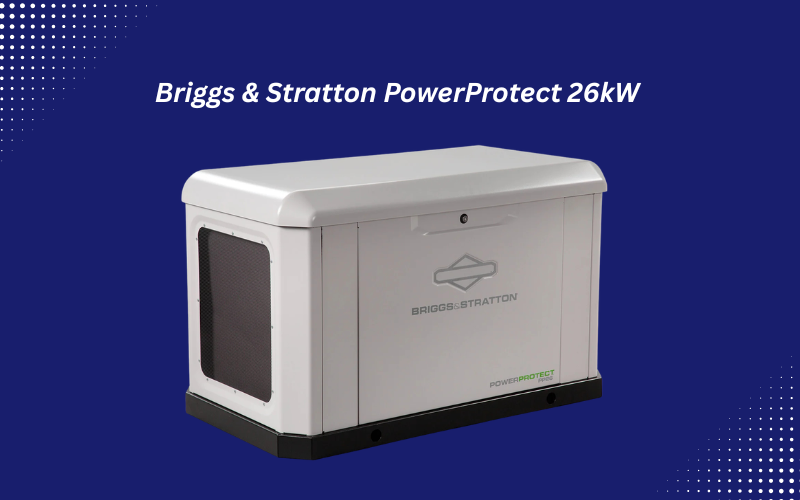
Larger homes with multiple HVAC zones need more muscle than a 20kW unit provides. The Briggs & Stratton PowerProtect 26kW fills that gap as the most powerful air-cooled home standby generator on the market today. It handles heavy simultaneous loads, including central air conditioning, without load shedding.
What separates this unit from competitors is fuel consistency. Unlike many rivals that lose output on natural gas, the PowerProtect 26kW delivers equal power on both natural gas and propane through its NGMax technology. Generac units, by comparison, often derate 10 to 15 percent when running on natural gas. Briggs & Stratton also backs this model with a 7-year comprehensive warranty, the longest in its class.
| Spec | Detail |
|---|---|
| Power output | 26 kW |
| Fuel type | Natural gas or liquid propane, equal output on both |
| Installation | Permanent standby, professional install required |
| Warranty | 7-year comprehensive |
| Best for | Large homes, multiple HVAC zones, high total load |
Pros: No load shedding needed, longest warranty in its class, consistent NG output, strong motor-starting capacity.
Cons: Larger footprint, higher cost than mid-tier standby units, still requires professional gas hookup.
Homeowners with larger properties, pools, or multiple air conditioning zones get the most value from this unit. It genuinely qualifies as the best high-capacity standby generator for demanding California homes.
3. DuroMax XP13000HX
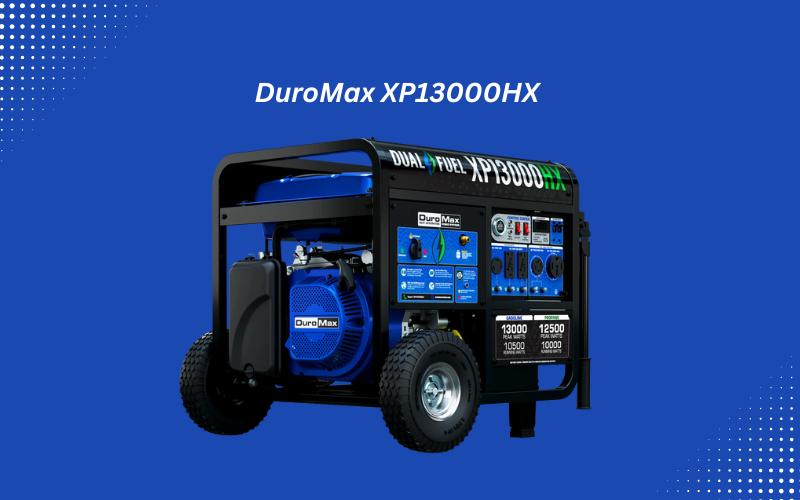
Not every homeowner wants or needs a permanent standby install. The DuroMax XP13000HX delivers serious power in a portable, dual-fuel package that costs a fraction of a standby system. It runs on gasoline or propane, which matters during extended outages when gas station lines stretch for blocks.
On gasoline, this unit delivers 10,500 running watts and 13,000 starting watts. On propane, output drops slightly to 9,975 running watts. An 8.3-gallon fuel tank keeps it running for roughly 8.5 hours at 50% load on gasoline. The unit includes a 50-amp outlet that connects directly to a transfer switch, allowing it to power major home circuits, not just a few appliances.
| Spec | Detail |
|---|---|
| Running watts (gas) | 10,500 W |
| Starting watts (gas) | 13,000 W |
| Running watts (propane) | 9,975 W |
| Fuel tank capacity | 8.3 gallons |
| Runtime at 50% load | ~8.5 hours (gasoline) |
| Price range | $1,600–$1,900 |
| Noise level | 74 dBA |
Pros: Dual-fuel flexibility, strong power-to-price ratio, transfer-switch ready, portable for evacuation use.
Cons: Louder than inverter models, requires manual fuel refills, open-frame design needs outdoor placement.
For budget-conscious homeowners who still want serious backup capacity, this generator delivers standby-level power without the standby-level price tag.
Battery-Powered Options for Cleaner, Quieter Backup
Combustion generators work well, but battery power stations solve a different problem. They store energy silently, produce zero emissions indoors, and eliminate fuel storage risk entirely. In wildfire-prone areas, that last point carries real weight. Storing gasoline near a home increases fire risk during exactly the conditions a PSPS event is designed to avoid.
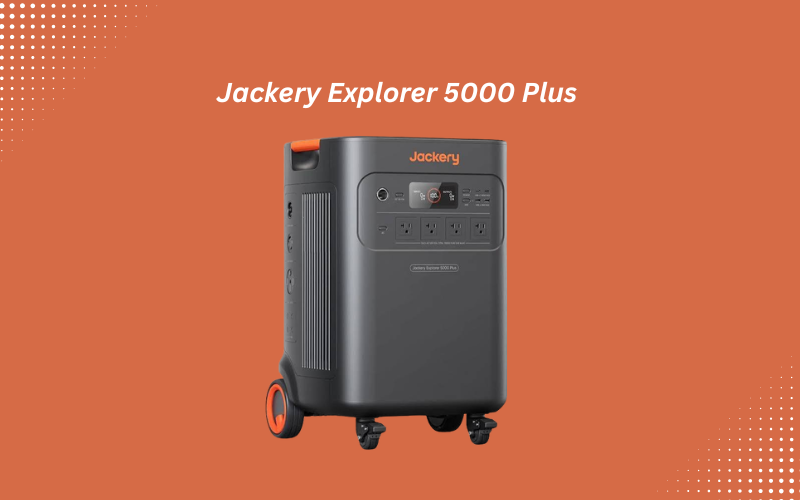
4. Jackery Explorer 5000 Plus
The Jackery Explorer 5000 Plus leads the expandable battery category with a 5,040Wh base capacity and a 7,200-watt continuous output. That output level handles central air conditioning, power tools, and major kitchen appliances at the same time. Peak output reaches 14,400 watts for handling motor startup surges.
What makes this unit stand out is its expansion ceiling. Homeowners can scale the system up to 60kWh of total capacity by adding battery modules over time. That flexibility lets a family start small and grow into full whole-home backup as budget allows. Solar input reaches 4,000 watts, among the highest in its class, which means faster recharging during multi-day outages.
| Spec | Detail |
|---|---|
| Base battery capacity | 5,040 Wh (LiFePO4) |
| Continuous AC output | 7,200 W |
| Peak output | 14,400 W |
| Max expandable capacity | 60 kWh |
| Solar input | 4,000 W |
| Price range | $2,500–$3,700 (unit only) |
| Warranty | 10 years |
Pros: Massive expansion ceiling, highest solar input in its class, silent operation, no fuel storage risk.
Cons: Heavy at 134 lbs, high upfront cost at full capacity, slower AC-only recharge without solar.
This generator earns its place as the best expandable battery backup because it grows alongside a family’s power needs. Start with the base unit, then add capacity as PSPS events become more frequent in your area.
5. Anker SOLIX F3800
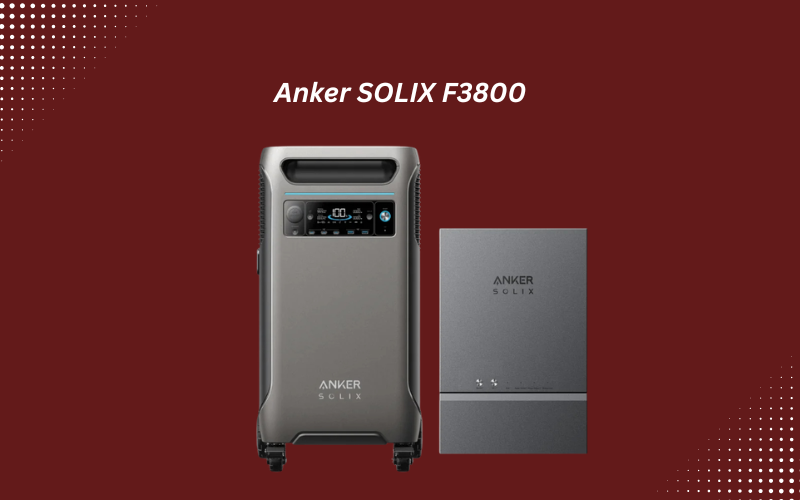
The Anker SOLIX F3800 targets tech-savvy homeowners who prioritize charging speed and smart app control. Its HyperFlash charging technology reaches 80% capacity in about one hour, dramatically faster than most competitors. That speed matters when a PSPS warning gives only a day or two of notice before power drops.
Base capacity sits at 3,840Wh, smaller than the Jackery, but the F3800 offers true split-phase 240V output, which supports whole-home backup panels more directly. Continuous output reaches 6,000 watts with a 9,000-watt peak. Like the Jackery, it expands with additional battery modules, reaching up to 53.8kWh in a maxed-out configuration.
| Spec | Detail |
|---|---|
| Base battery capacity | 3,840 Wh (LiFePO4) |
| Continuous AC output | 6,000 W |
| Peak output | 9,000 W |
| Max expandable capacity | 53.8 kWh |
| Fast charge | 80% in ~1 hour (HyperFlash) |
| Price range | $2,800–$3,700 |
| Output type | True split-phase 240V |
Pros: Fastest recharge speed in its class, smart app monitoring, true 240V split-phase output, strong price-per-watt-hour value.
Cons: Smaller base capacity than Jackery, premium price at full expansion, heavier reliance on app for full control.
Families who value speed and smart-home integration over raw base capacity will prefer the Anker SOLIX F3800. It charges fast enough to top off between short outage windows.
Side-by-Side Comparison Table
| Generator | Type | Output | Price Range | Best For |
|---|---|---|---|---|
| Cummins RS20A 20kW | Standby (gas/propane) | 20 kW | $5,000–$7,500 | Whole-home, single HVAC zone |
| Briggs & Stratton PowerProtect 26kW | Standby (gas/propane) | 26 kW | $6,500–$9,000 | Large homes, multiple HVAC zones |
| DuroMax XP13000HX | Portable dual-fuel | 10,500 running W | $1,600–$1,900 | Budget-friendly essential circuits |
| Jackery Explorer 5000 Plus | Battery power station | 7,200 W continuous | $2,500–$3,700 | Expandable, solar-heavy households |
| Anker SOLIX F3800 | Battery power station | 6,000 W continuous | $2,800–$3,700 | Fast recharge, smart-home users |
How to Choose the Right Generator for Your Home
Start with your home’s square footage and HVAC setup. Homes under 2,500 square feet with a single HVAC system fit well with the Cummins RS20A. Larger homes with multiple zones need the extra headroom the Briggs & Stratton PowerProtect 26kW provides.
Renters, apartment dwellers, and homeowners without space for a permanent installation should look at portable or battery options instead. The DuroMax XP13000HX offers the lowest entry cost with genuine whole-circuit power. The Jackery and Anker battery stations suit anyone who wants silent, emissions-free backup, especially in fire-prone neighborhoods where fuel storage raises safety concerns.
Budget plays the deciding role for most families. Standby generators cost more upfront but eliminate manual setup entirely. Portable and battery units cost less initially but require more hands-on management during an actual outage event.
Maintenance and Safety Tips for Wildfire Season
Test any backup generator monthly, not just during fire season. A generator that fails during its first real outage defeats its entire purpose. Standby units typically run a short self-test automatically, but portable and battery units need manual checks.
Store gasoline and propane away from the home’s structure, ideally in a detached shed or garage. Never run a combustion generator indoors or in an attached garage, even with the door open. Carbon monoxide poisoning remains one of the most common generator-related dangers during outages.
Keep transfer switches inspected and labeled clearly. Confused wiring during a stressful outage event leads to costly mistakes. Battery power station owners should keep units charged to at least 80% throughout fire season, since PSPS warnings often arrive with less than 48 hours notice.
Frequently Asked Questions
What size generator do I need for a California home during a PSPS event? Most homes between 2,000 and 3,000 square feet need 20kW to 26kW for full whole-home coverage. Smaller homes running only essential circuits can rely on a 10,000-watt portable unit or a battery station with at least 3,000Wh capacity.
How long do PSPS power outages typically last in California? Historical PG&E data shows average PSPS restoration times between 10 and 17 hours, though some rural circuits stay dark for two to three days. Plan backup power for at least 72 hours to stay safe.
Are battery power stations safer than gas generators during wildfire season? Yes, battery power stations eliminate fuel storage risk and produce zero emissions. They work well in areas where storing gasoline or propane near the home raises additional fire safety concerns.
Do I need a permit to install a whole house generator in California? Most California counties require permits for permanent standby generator installation, including electrical and gas line work. Always hire a licensed contractor and check local fire code requirements before installation.
Can solar panels recharge these generators during a multi-day outage? Yes, both the Jackery Explorer 5000 Plus and Anker SOLIX F3800 accept solar input, allowing continuous recharging during daylight hours. This makes them ideal for extended outages when fuel access becomes difficult.
Which generator offers the best value for a typical family budget? The DuroMax XP13000HX delivers the strongest power-to-price ratio for buyers who want serious backup without a large upfront investment.
Final Words
Wildfire season in California no longer waits for summer, and power outages no longer arrive as rare surprises. The five generators covered here each solve a different piece of that problem. The Cummins RS20A and Briggs & Stratton PowerProtect 26kW deliver true whole-home peace of mind for homeowners ready to invest in permanent standby power. The DuroMax XP13000HX gives budget-focused families a portable, dual-fuel safety net. The Jackery Explorer 5000 Plus and Anker SOLIX F3800 offer clean, expandable battery backup for households that want silence and safety over raw fuel-based power.
Choose based on your home size, budget, and how much manual setup you want during an actual emergency. Whatever you pick, test it now, not during the next Red Flag Warning. California’s fire season rewards preparation, and the right generator turns a stressful blackout into a minor inconvenience.




 Get survival, travelling and auto tips, follow new technology trends, entertainment stories and world events with PeekTimes.