


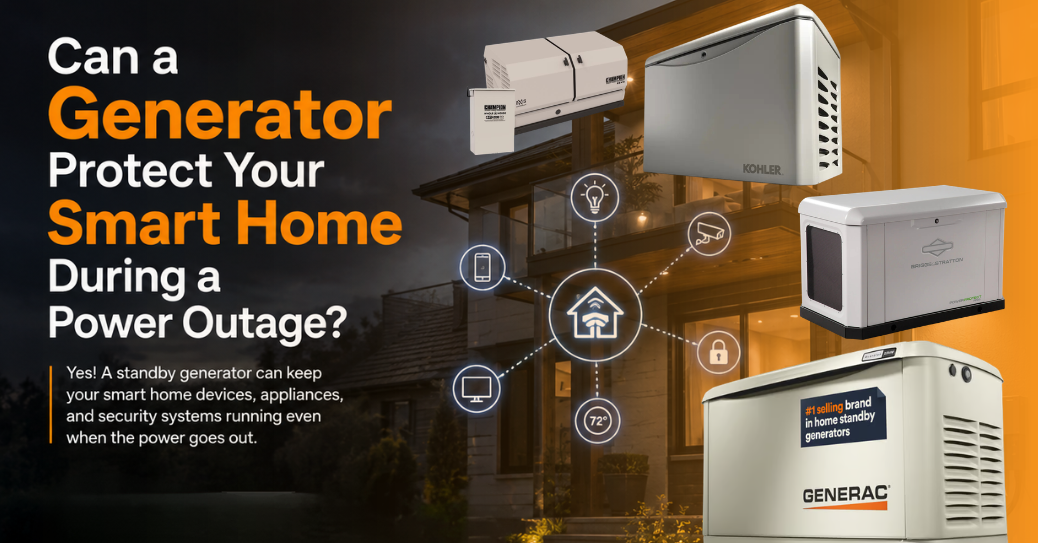
Power outages hit harder this year than they did five years ago. Your smart home runs on constant electricity, and one blackout can silence your thermostat, cameras, locks, and hub in seconds. Can a Generator Protect Your Smart Home During a Power Outage? This guide explains how generators can help keep your connected devices running when the power goes out. It breaks down real data, generator types, and setup steps. It also compares costs, wattage needs, and smart home compatibility in detail.
Why Smart Homes Need Backup Power More Than Ever
Smart homes depend on Wi-Fi routers, hubs, and cloud connections. A power cut breaks that chain instantly. Security cameras go dark. Smart locks may fail open or shut. Thermostats stop adjusting temperature for pets or plants.
Outages are also lasting longer nationwide. The average outage length jumped from 8.1 hours in 2022 to 12.8 hours by mid-2025. Southern states suffer the worst impact today. Customers there face average outages of 18.2 hours, largely from hurricanes and heat waves.
Nationwide, 45% of utility customers experienced an outage in early 2025 alone. Extreme weather caused most of those failures. Nearly half involved storms, hurricanes, snow, or wildfires. Some residents even evacuated due to severity.
The Energy Information Administration confirms this trend too. U.S. customers averaged 11 hours of outages in 2024, nearly double the prior decade’s rate. Hurricanes Helene, Milton, and Beryl caused most of that time. This data proves outages are not rare anymore.
A generator protects your smart devices during these disruptions. It keeps routers, hubs, and cameras running continuously. It also prevents data loss on connected security systems. Without backup power, your smart home becomes a dumb one instantly.
How Power Outages Affect Smart Home Devices
Smart home ecosystems rely on layered connectivity. Your router feeds internet to hubs like SmartThings or Google Home. Hubs then control locks, thermostats, lights, and sensors. Cut power anywhere in this chain and everything stops.
Battery backup exists in some devices already. Video doorbells and select locks include small batteries. However, most hubs, routers, and modems have zero backup. Your entire smart ecosystem depends on continuous grid electricity.
Security systems suffer the most during blackouts. Cameras stop recording exactly when burglars strike most often. Studies show break-ins spike during outages and storms. A dark home invites unwanted attention from criminals nearby.
Refrigerators with smart sensors also lose tracking ability. Food spoils faster without power monitoring or cooling alerts. Smart thermostats stop protecting pipes from freezing in winter. This creates costly water damage within hours, not days.
Types of Generators for Smart Homes
Different generators offer different protection levels for your devices. Choosing correctly determines whether your smart home stays functional. Below is a breakdown of common options available today.
| Generator Type | Power Output | Best For | Smart Home Compatibility |
|---|---|---|---|
| Portable Generator | 3,000–10,000 watts | Short outages, essentials | Moderate, needs stable inverter |
| Inverter Generator | 2,000–7,000 watts | Sensitive electronics | Excellent, clean sine wave |
| Standby Generator | 7,000–48,000 watts | Whole-home backup | Excellent, automatic switch |
| Solar Generator | 1,000–5,000 watts | Quiet, eco-friendly backup | Good, limited runtime |
Standby generators dominate the whole-house backup segment today. This category holds the fastest growth rate in the industry. It rose 7.9% annually as buyers prioritize full-home coverage. These units connect directly to your electrical panel permanently.
Inverter generators suit smart homes needing clean power specifically. They produce stable voltage that protects sensitive circuit boards. Routers, hubs, and modems need this stability to function properly. Cheap portable generators can spike voltage and damage electronics.
Not every household needs a fuel-based unit though. Homeowners weighing quiet, low-maintenance options often compare a solar battery vs backup generator setup before buying. Both approaches protect smart devices, but runtime and cost differ significantly.
Why Clean Power Matters for Electronics
Smart home devices contain delicate microprocessors and circuit boards. Dirty power causes flickering, resets, or permanent hardware damage. Traditional generators produce rough electrical waveforms sometimes.
Inverter generators solve this problem through advanced technology. They convert power twice for a cleaner sine wave output. This process protects laptops, routers, and smart hubs reliably. Always check total harmonic distortion ratings before buying any unit.
Voltage fluctuations damage smart thermostats and security panels quickly. A cheap generator without voltage regulation risks costly device failure. Spending more upfront on clean power saves money later. Replacing a fried smart hub costs more than expected.
Standby Generators and Automatic Transfer Switches
Standby generators offer the strongest smart home protection available. They activate automatically within seconds of detecting an outage. This feature matters enormously for continuous smart device operation.
An automatic transfer switch triggers this instant response reliably. Nearly 72% of newly installed standby systems include this switch today. It disconnects grid power and starts your generator instantly. Your smart devices barely notice the transition happening.
Without automatic switching, you face a dangerous gap in coverage. Manual generators require you to notice the outage first. Then you must start the unit and plug in devices. This gap can last minutes or even hours sometimes.
During that gap, your security cameras stop recording completely. Smart locks may lose connection to your phone app. Garage door openers become manual-only until power returns. Automatic systems eliminate this vulnerability entirely and instantly.
Sizing Your Generator for Smart Home Needs
Correct sizing determines whether your generator meets actual demand. Undersized units fail to run everything simultaneously during outages. Oversized units waste money on unnecessary fuel and capacity.
| Smart Home Component | Average Wattage Needed |
|---|---|
| Wi-Fi Router and Modem | 20–50 watts |
| Smart Hub (SmartThings, Hubitat) | 10–20 watts |
| Security Cameras (each) | 5–15 watts |
| Smart Thermostat | 3–10 watts |
| Smart Lock | 1–5 watts |
| Refrigerator (with smart sensors) | 600–800 watts |
| Sump Pump | 800–1,500 watts |
| Furnace Fan | 600–1,000 watts |
Most smart home devices draw surprisingly little power individually. Your router, hub, and locks combined need under 100 watts. The real power draw comes from appliances like refrigerators. A 5,000-watt generator typically covers a smart home comfortably.
Add up your essential devices before choosing generator size. Include your router, hub, cameras, refrigerator, and HVAC fan. Then add 20% extra capacity for safety margin. This buffer prevents overload during startup power surges.
Cost of Generators and Long-Term Value
Generator prices vary widely based on type and capacity. Understanding costs helps you budget for smart home protection properly.
| Generator Type | Average Price Range | Installation Cost |
|---|---|---|
| Portable Generator | $400–$1,200 | None, plug-and-play |
| Inverter Generator | $600–$2,500 | None to minimal |
| Standby Generator (10–20 kW) | $3,000–$6,000 | $3,000–$5,000 |
| Standby Generator (20–48 kW) | $6,000–$15,000 | $5,000–$10,000 |
| Solar Generator | $800–$3,500 | Minimal, panel setup |
The home standby generator market keeps expanding steadily worldwide. It grew from $9.38 billion in 2025 to $9.95 billion in 2026. Analysts project it reaching $14.80 billion by 2032. This growth reflects rising demand for reliable backup power.
Natural gas units currently lead consumer preference broadly. This fuel segment held 48% market share in 2025. Natural gas offers unlimited runtime without refueling concerns. It connects directly to your home’s existing gas line.
Smart-enabled generators are trending upward significantly too. Over 15% of newly sold generators included Wi-Fi diagnostics recently. These units send alerts directly to your smartphone app. You get notified about maintenance needs and outage status instantly.
Integrating Generators With Smart Home Systems
Modern generators now sync with smart home platforms directly. This integration creates a genuinely connected backup power experience. You receive real-time alerts about fuel levels and runtime.
Many standby generators pair with apps like Kohler and Generac. These apps show maintenance schedules and outage history clearly. Some integrate with Amazon Alexa and Google Assistant too. You can check generator status through voice commands easily.
Smart transfer switches also allow selective circuit prioritization now. You choose which devices receive power first during outages. Security systems and refrigerators can rank above less critical circuits. This customization maximizes efficiency during limited power situations.
Pairing your generator with a smart home energy monitor helps further. These monitors track which devices draw the most power. You then adjust settings to extend generator runtime significantly. This combination creates a truly resilient smart home setup.
Regional Considerations for Generator Selection
Your location determines outage risk and generator priority level. Southern states face the highest outage duration currently. Residents there average 18.2 hours without power per major event.
Florida sits at the center of this regional risk. Hurricane season repeatedly knocks out power across entire counties. Homeowners there increasingly research a dedicated backup generator for Florida hurricane season before storms arrive. Waiting until a storm warning issues often means empty store shelves.
Western states rank second in outage severity nationally. They experience 12.4 hours of average outage duration. Wildfires and planned shutoffs drive much of this disruption. California homeowners face repeated public safety power shutoffs each fire season. Many now search for the best generator for California wildfires and power outages before choosing a unit.
Texas remains particularly vulnerable among individual states specifically. The state recorded 31 outages totaling approximately 740 hours in recent tracking. Louisiana followed closely with 697 hours across 16 outages. Homeowners in these regions need robust standby systems urgently.
South Carolina residents faced extreme conditions during 2024 specifically. Hurricane Helene caused outages averaging 53 hours per customer there. This single storm affected 1.2 million customers across the state. Such events justify investing in whole-home standby coverage.
Outage risk also varies dramatically outside the United States. German customers lose power for roughly 12 minutes yearly on average. That reliability contrasts sharply with the U.S. grid’s current strain. Even so, homeowners researching the best standby generators for German homes still value backup power for winter storms and rural grid gaps.
Some states report minimal outage activity by comparison. Hawaii, Kansas, Maryland, Montana, and New Mexico saw no major outages recently. Homeowners there might choose smaller portable or inverter units instead. Regional risk should always guide your generator investment decision.
Fuel Types and Their Smart Home Suitability
Fuel choice affects generator reliability and long-term convenience significantly. Each fuel type carries distinct advantages and limitations worth considering.
| Fuel Type | Runtime | Convenience | Best Use Case |
|---|---|---|---|
| Natural Gas | Unlimited | High, connected to home line | Long outages, whole-home backup |
| Propane | Long, tank-dependent | Moderate, needs storage | Rural homes without gas lines |
| Diesel | Long, efficient | Moderate, needs fuel storage | Heavy-duty, frequent outages |
| Gasoline | Short, 8–12 hours per tank | Low, requires refueling | Occasional, short-term outages |
| Solar/Battery | Limited by battery capacity | High, silent operation | Eco-conscious, moderate loads |
Natural gas generators suit smart homes needing constant uptime best. They never run out of fuel during extended outages. This matters enormously for security systems and medical devices. Diesel remains dominant globally too, holding 66.6% market share in 2025.
Diesel generators deliver reliable power across demanding applications broadly. Healthcare facilities and manufacturing plants favor this fuel type. Homeowners in disaster-prone areas increasingly choose diesel too. It offers strong reliability during multi-day outage events.
Maintenance Tips to Keep Your Generator Smart-Ready
Regular maintenance ensures your generator activates when needed most. Neglected units often fail during the exact moment you need them.
Test your generator monthly under load conditions specifically. Run it for fifteen minutes with devices actually connected. This confirms proper function before a real emergency occurs. Skipping tests risks discovering problems during an actual blackout.
Check oil levels and air filters every three months consistently. Standby generators need professional servicing annually at minimum. Schedule this before hurricane or winter storm seasons begin. Proactive care extends generator lifespan significantly over time.
Keep firmware updated on smart-enabled generator models regularly. Manufacturers release updates improving efficiency and remote monitoring features. An outdated system may miss critical alerts about problems. Enable automatic updates through the manufacturer’s companion app.
Store extra fuel safely if using propane or gasoline units. Rotate gasoline every six months to prevent degradation issues. Diesel and propane store longer but still need periodic checks. Natural gas eliminates this storage concern entirely for homeowners.
Common Mistakes Homeowners Make With Generators
Many homeowners undersize their generator based on rough estimates only. This leads to overload trips during actual outage events. Always calculate exact wattage needs before purchasing any unit.
Others skip professional installation for standby generator systems entirely. Improper installation creates fire hazards and voids warranty coverage. Licensed electricians ensure code compliance and safe operation always. This step protects your investment and household safety long-term.
Some buyers ignore noise levels when selecting portable generators specifically. Loud units disturb neighbors and violate local noise ordinances sometimes. Inverter generators run significantly quieter than standard portable models. Check decibel ratings before finalizing your generator purchase decision.
Forgetting carbon monoxide safety remains a dangerous and common mistake. Never run generators inside garages or enclosed spaces ever. Install carbon monoxide detectors near your generator location always. This single step prevents potentially fatal accidents at home.
Environmental and Long-Term Considerations
Solar generators appeal to environmentally conscious smart homeowners increasingly. They produce zero emissions and operate completely silently too. Battery capacity limits their runtime compared to fuel-based alternatives though.
Hybrid systems combining solar and battery storage gain popularity now. These systems recharge during daylight and discharge during outages. They suit homes with moderate power needs and sunny climates well. Combining solar with a small backup generator maximizes reliability further.
The broader energy market shows steady interest in cleaner options. Gas standby generator demand grows at 6.5% annually through 2035. This reflects a shift toward lower-emission backup power sources. Smart homeowners increasingly weigh environmental impact alongside reliability needs.
Final Words
A generator absolutely protects your smart home during outages effectively. It keeps routers, hubs, cameras, and locks running continuously. Standby generators with automatic transfer switches offer the strongest protection. They activate instantly, closing the dangerous gap manual units create.
Outages keep growing longer and more frequent across America. Average durations nearly doubled between 2022 and 2024 nationally. This trend makes backup power essential rather than optional now. Your smart home investment deserves equally reliable power protection.
Choose generator size based on actual device wattage requirements. Prioritize clean power output to protect sensitive electronics long-term. Match fuel type to your region’s outage patterns and duration. Regular maintenance ensures your system works when you need it.
Smart home technology only delivers value with consistent power behind it. A well-chosen generator bridges that gap during every outage. It transforms vulnerability into resilience for your entire household. That protection pays for itself during the very first storm.
Frequently Asked Questions
Can a generator power my entire smart home during an outage?
Yes, properly sized standby generators power entire smart homes reliably. They cover routers, hubs, cameras, appliances, and HVAC systems simultaneously.
What size generator do I need for a smart home?
Most smart homes need 5,000 to 10,000 watts minimum coverage. Add extra capacity for refrigerators, sump pumps, and HVAC fans.
Do smart home devices need special generator features?
Yes, they need clean sine wave power from inverter or standby units. Dirty power damages sensitive circuit boards over time.
How quickly does a standby generator activate during an outage?
Automatic transfer switches activate standby generators within ten to thirty seconds. This gap barely affects most smart home devices.
Is a portable generator enough for smart home protection?
Portable generators work for short outages and basic device protection. They require manual setup and lack automatic switching capability.
How much does a whole-home standby generator cost?
Standby generators typically cost between $3,000 and $15,000 installed fully. Price depends on wattage capacity and installation complexity.
Can I connect my generator to a smart home app?
Yes, many modern generators integrate with manufacturer apps directly now. These apps track fuel levels, runtime, and maintenance alerts.
What fuel type works best for long outages?
Natural gas offers unlimited runtime without refueling during extended outages. It suits homes needing continuous multi-day backup power.
Do I need a professional to install a standby generator?
Yes, licensed electricians must install standby generators for safety compliance. This ensures proper connection and warranty protection too.
Will a generator protect my smart security system during a blackout?
Yes, generators keep cameras, locks, and alarms fully operational continuously. This prevents security gaps exactly when risks increase most.






 Get survival, travelling and auto tips, follow new technology trends, entertainment stories and world events with PeekTimes.