


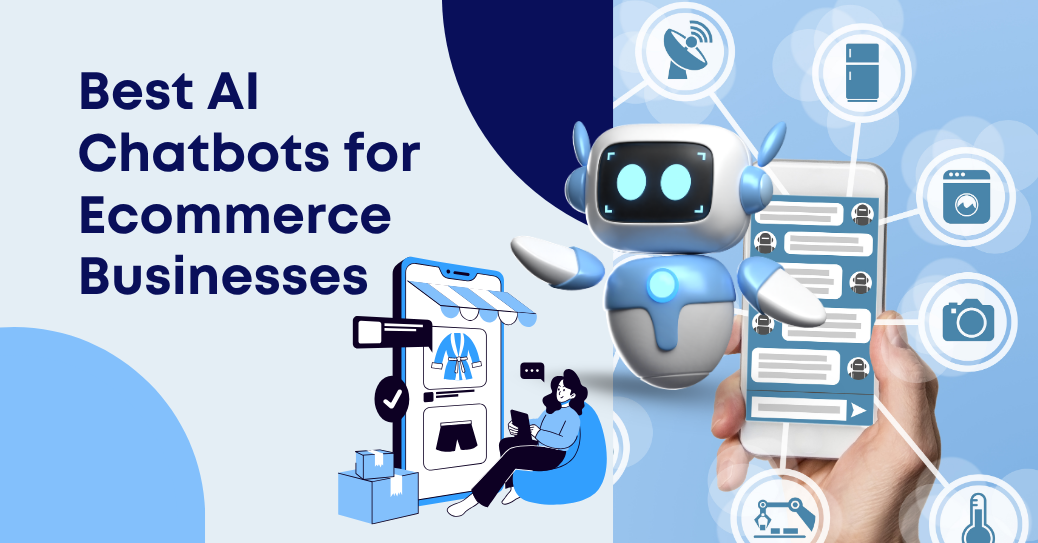
Ecommerce shoppers expect instant answers, not a support queue. AI chatbots for ecommerce businesses now handle order tracking, returns, and product questions around the clock. Store owners no longer wonder if a chatbot helps sales. They wonder which AI chatbot delivers the best return.
This guide ranks the five best AI chatbots for ecommerce businesses today. Each section covers pricing, resolution rates, and who the tool suits best. You get real numbers pulled from current vendor data, not vague sales copy.
Why Ecommerce Businesses Need AI Chatbots Right Now
Cart abandonment remains the biggest revenue leak in online retail. Global cart abandonment sits above 70%, and slow or missing support drives much of that loss. Shoppers who leave without an answer rarely come back on their own.
AI chatbots close that gap directly. Shoppers who interact with an AI chatbot convert at roughly 12.3%, compared to 3.1% for those who don’t chat at all. That gap explains why AI-driven support now sits at the center of ecommerce growth strategy.
The financial case backs this up clearly. Juniper Research estimates chatbots save retailers more than $11 billion a year in support costs. Salesforce also found that AI influenced 17% of US holiday ecommerce sales in one recent season.
Resolution rates keep climbing too. Leading AI agents now resolve between 40% and 67% of support tickets without human help, depending on the platform and store complexity. That frees human agents to focus on complex, high-value conversations instead.
Here’s a snapshot of the numbers driving ecommerce chatbot adoption.
| Metric | Current Figure |
|---|---|
| Global cart abandonment rate | 70.19% |
| Conversion rate with AI chatbot interaction | 12.3% |
| Conversion rate without chatbot interaction | 3.1% |
| Annual retailer savings from chatbots | $11 billion+ |
| Typical AI ticket resolution rate range | 40% to 67% |
| Conversion lift from proper implementation | 20% to 35% |
These numbers make one thing clear: AI chatbots for ecommerce businesses now pay for themselves fast when set up correctly.
How We Chose These AI Chatbots for Ecommerce
We evaluated each platform on five factors. Resolution rate came first, since a chatbot that can’t answer questions creates more frustration than value. Ecommerce-specific integrations ranked second, covering Shopify, WooCommerce, and order-level actions.
Pricing transparency mattered third, since usage-based billing can spike fast during sales events. Omnichannel reach came fourth, covering web chat, WhatsApp, and social messaging. Setup speed rounded out the list, since small teams need results within days, not months.
Now let’s walk through the five best AI chatbots for ecommerce businesses.
1. Tidio (Lyro AI)
Tidio built its reputation on fast setup and genuine ease of use for smaller online stores. Its Lyro AI agent runs on Claude and resolves up to 67% of support tickets, though most real stores land between 40% and 60%.
Lyro handles native Shopify actions directly, including checking order status, processing refunds, and updating order details. WooCommerce, BigCommerce, Magento, and Prestashop all get native support too, plus WhatsApp and Instagram messaging.
Tidio’s free plan includes 50 AI conversations monthly, a solid way to test the platform. Paid plans start at $29 per month for Starter, with Growth running $49 to $59 per month. Lyro AI and Flows automation bill as separate add-ons, which can push real costs to $100 to $150 per month.
Watch for the pricing jump between Growth and the Plus tier, priced near $749 per month with no middle option. This gap catches growing stores off guard during high-traffic seasons.
Small DTC brands wanting fast setup and predictable entry pricing fit Tidio best. Stores expecting to scale past 10 agents should plan for that pricing cliff in advance.
Best for: Small Shopify and WooCommerce stores needing quick, affordable AI chat setup.
2. Gorgias
Gorgias built its entire platform around ecommerce support, not general customer service. It pulls live order data directly from Shopify, Magento, and WooCommerce into every conversation automatically.
The AI Agent handles intent-based automation, answering shipping questions and processing simple order changes without human input. This order-level depth sets Gorgias apart from more generic chatbot platforms.
Helpdesk plans start at $10 per month for Starter, scaling through Basic at roughly $60, Pro near $360, and Advanced around $900 monthly. The AI Agent bills separately, at about $0.90 to $1.00 per fully automated resolution.
Unlimited seats across every tier make Gorgias scale well for growing support teams. Stores with high ticket volume avoid the per-agent cost trap that hurts seat-based competitors.
Larger Shopify-centric brands handling frequent returns and order edits benefit most from Gorgias. Smaller stores with simple product catalogs may not need this level of order-management depth.
Best for: Shopify-centric ecommerce brands with high order-related ticket volume.
3. Intercom (Fin AI Agent)
Intercom brings enterprise-grade support automation to ecommerce through its Fin AI Agent. Fin reasons across customer data, resolves complex multi-step questions, and integrates deeply with existing support workflows.
Fin bills per resolution rather than per seat, at $0.99 per successful interaction. This pricing model rewards strong AI performance but scales quickly at volume. A store running 2,000 monthly resolutions pays roughly $1,980 in AI fees alone.
Base plans start around $29 per month per seat, with Essential, Advanced, and Expert tiers adding features as ticket complexity grows. Intercom pairs this AI layer with deep team inbox tools built for diverse customer touchpoints.
The per-resolution model creates real risk during peak shopping events like Black Friday. Costs can spike three times normal levels when ticket volume surges unexpectedly.
Mid-size to larger DTC brands needing comprehensive engagement tools beyond simple chat get the most value. Budget-conscious small stores often find the per-resolution model too unpredictable.
Best for: Mid-market and enterprise ecommerce brands needing deep support automation.
4. ManyChat
ManyChat takes a different approach, focusing entirely on social commerce automation. The platform runs chatbots across Instagram and Messenger, meeting shoppers exactly where they already scroll.
ManyChat’s AI handles product discovery, answers DMs automatically, and drives traffic straight from social posts to checkout. This social-first design suits brands that generate significant sales through Instagram and Facebook rather than a traditional storefront.
The platform integrates with Shopify and other major ecommerce platforms to sync product catalogs and order data. Automated flows trigger based on comments, story replies, and direct messages in real time.
Pricing scales with contact volume, following a freemium model that lets small brands test automation before committing budget. Growing social-first stores typically outgrow the free tier within a few months of active use.
Brands built around Instagram and Messenger sales channels benefit most from ManyChat’s focus. Stores relying primarily on website traffic should pair it with a web-based chatbot instead.
Best for: Social commerce brands driving sales through Instagram and Messenger.
5. Octane AI
Octane AI stands apart by focusing on engagement and data collection rather than pure support automation. Its standout feature builds interactive quizzes that guide shoppers toward the right product recommendation.
These quizzes serve two goals at once. They engage visitors who might otherwise leave, and they gather zero-party data that sharpens future marketing campaigns and email segmentation.
Thousands of merchants use Octane AI to lift conversion rates and average order value through personalized product discovery. The platform ties quiz results directly into email and SMS flows for retargeting.
Pricing starts at $50 per month for the Basic plan, with Plus beginning around $200 monthly. Enterprise packages start near $500 per month for larger catalogs and higher traffic volumes.
Stores with broad product catalogs where shoppers need guidance benefit most from Octane AI. Simple single-product stores may not need this level of interactive discovery.
Best for: Ecommerce brands wanting quiz-driven product discovery and zero-party data collection.
Side-by-Side Comparison Table
| Tool | Starting Price | Best For | Standout AI Feature |
|---|---|---|---|
| Tidio (Lyro AI) | Free / $29 per month | Small Shopify and WooCommerce stores | Native Shopify order actions |
| Gorgias | $10 per month + $0.90/resolution | Order-heavy Shopify support teams | Live order data in every ticket |
| Intercom (Fin) | $29 per seat + $0.99/resolution | Mid-market and enterprise support | Deep multi-step reasoning |
| ManyChat | Free / scales with contacts | Instagram and social commerce | Social DM automation |
| Octane AI | $50 per month | Product discovery and quizzes | Interactive quiz-to-cart flows |
Every ecommerce business runs differently, so match your channel mix and ticket volume against this table before committing.
How to Choose the Right AI Chatbot for Your Ecommerce Business
Start by identifying where your support tickets actually come from. Stores fielding constant shipping and order questions need deep Shopify integration first. Stores losing sales to abandoned carts need proactive, conversion-focused chat instead.
Calculate your realistic monthly ticket volume before comparing pricing. Per-resolution billing models like Intercom and Gorgias can spike hard during sales events. Flat-rate or bundled plans often protect small stores better during seasonal surges.
Check platform compatibility with your existing tech stack. A chatbot that doesn’t sync with Shopify, WooCommerce, or your email platform creates manual work instead of removing it. Most top platforms support at least basic Zapier connections as a fallback.
Test resolution rates using your own product catalog and common questions. Vendor-published rates often reflect best-case scenarios, not typical results. Real stores usually see resolution rates land ten to twenty points below advertised numbers.
Factor in seasonal scaling before signing an annual contract. Ask vendors directly how pricing behaves during traffic spikes like Black Friday or major promotions. This single question prevents most billing surprises later.
Common Mistakes Ecommerce Businesses Make With AI Chatbots
Many stores launch a chatbot without training it on their actual product catalog first. This leads to generic, unhelpful answers that frustrate shoppers instead of converting them. Feed the AI real product data and common questions before going live.
Some businesses ignore the difference between seat-based and per-resolution pricing. This mistake causes budget shocks during high-traffic periods. Model your expected ticket volume against both pricing structures before choosing.
Overlooking omnichannel reach limits chatbot impact significantly. A bot that only lives on the website misses shoppers browsing through Instagram or WhatsApp. Match your chatbot’s channels to where your customers actually spend time.
Finally, many stores treat chatbot deployment as a one-time setup task. AI resolution rates improve steadily with ongoing tuning and feedback review. Revisit chatbot performance monthly, especially after major catalog or policy changes.
Frequently Asked Questions
What is the best free AI chatbot for ecommerce businesses?
Tidio offers the strongest free tier, including 50 AI conversations monthly through its Lyro agent. ManyChat also provides a freemium model well suited to smaller social commerce stores.
How much does an AI chatbot cost for an ecommerce business?
Costs range from free entry tiers to $50 to $900 per month depending on features and ticket volume. Per-resolution models like Intercom and Gorgias can push costs higher during peak season.
Which AI chatbot works best for Shopify stores specifically?
Gorgias and Tidio both offer deep native Shopify integration, including live order data and automated refunds. Gorgias suits higher-volume stores, while Tidio fits smaller teams needing fast setup.
Do AI chatbots actually increase ecommerce conversion rates?
Yes. Properly implemented chatbots can lift conversion rates by 20% to 35% according to multiple vendor and industry studies. Shoppers who chat convert at roughly four times the rate of those who don’t.
Can AI chatbots handle refunds and order changes automatically?
Yes, on platforms like Gorgias and Tidio’s Lyro agent. Both can process refunds, update addresses, and check order status without human involvement in many cases.
Is Intercom worth the higher per-resolution cost?
It depends on ticket complexity. Intercom’s Fin agent handles nuanced, multi-step questions well, which suits mid-market and enterprise stores more than small shops with simple support needs.
Final Words
AI chatbots for ecommerce businesses now sit at the center of customer support and conversion strategy. They answer questions instantly, cut support costs, and convert hesitant shoppers into buyers around the clock.
Small stores should start with Tidio or ManyChat and expand automation as ticket volume grows. Shopify-heavy brands with frequent order questions belong with Gorgias. Larger operations needing deep reasoning across complex tickets should look toward Intercom’s Fin agent.
Whichever tool you choose, train it on real product data and monitor resolution rates closely. The ecommerce businesses winning with AI chat treat these tools as a growth lever, not a support afterthought. Pick one platform, tune it well, and let the conversion data guide your next move.






 Get survival, travelling and auto tips, follow new technology trends, entertainment stories and world events with PeekTimes.