


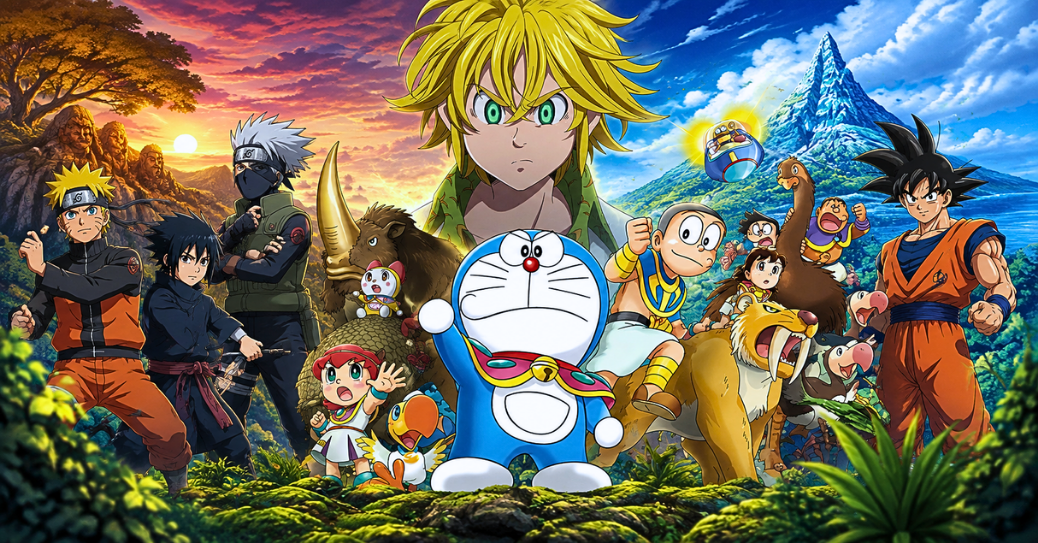
Anime dominates global streaming charts today. Crunchyroll, Netflix, and Disney+ now treat anime as premium content, not a niche add-on. Industry analysts track anime as a multibillion-dollar business, with several major research firms placing current global anime revenue in the $30–45 billion range and forecasting continued double-digit growth in the coming years. Merchandising, theatrical releases, and licensing drive much of that expansion. Overseas demand grows faster than domestic Japanese viewership every single year.
This guide ranks the 50 best Japanese anime series worth your time right now. It covers shonen action epics, psychological thrillers, sports dramas, slice-of-life comfort shows, and genre-defining classics. Each entry includes the studio, release year, episode count, and why the series earns its spot. A comparison table follows for quick scanning. FAQs close out the guide for common anime search queries.
Why Anime Viewership Keeps Growing Every Year
Streaming access explains most of the surge. Crunchyroll alone reports tens of millions of paying subscribers worldwide, and Netflix now co-produces original anime with major studios like MAPPA and Wit Studio. Simulcasts let fans in Lahore, London, and Los Angeles watch new episodes within hours of the Japanese broadcast. That same-day access eliminated the years-long localization gap that once slowed anime’s global spread.
Cultural acceptance shifted too. Anime once carried a niche stigma in Western markets. Today, mainstream outlets cover season premieres the same way they cover prestige television. Adult viewers now make up a huge share of the audience, which pushes studios toward darker, more mature storytelling alongside traditional shonen fare. This guide reflects that range, mixing beloved classics with newer hits that built massive fandoms in the last few years.
Recent Anime Industry Stats Worth Knowing
Market researchers disagree on exact figures, but the overall trend stays consistent across every report. Mordor Intelligence pegs current anime revenue near $30 billion, while other firms like Precedence Research place the figure closer to $98 billion once merchandising and adjacent media get counted. Grand View Research lands somewhere in between, near $42 billion. The spread comes down to methodology, not disagreement about direction, since every major firm projects steady annual growth for years to come.
Japan still produces the overwhelming majority of anime content, holding roughly 40 percent of global market share on its own. Overseas revenue now grows far faster than domestic Japanese sales, according to multiple industry trackers. Streaming platforms drive that overseas surge by removing the release-date gap that once separated Japanese broadcasts from international audiences. Merchandising remains the single largest revenue category, ahead of streaming subscriptions and theatrical box office combined.
Studio partnerships also shifted meaningfully in recent years. Netflix formed a strategic production partnership with MAPPA, joining similar deals struck with other major studios. These arrangements give streaming platforms a direct hand in production rather than simple licensing after the fact. That shift toward co-production lets platforms secure exclusive windows while giving studios steadier funding for ambitious projects.
Labor conditions inside Japan’s animation industry remain a persistent concern despite booming revenue. Animator wages have historically lagged behind the industry’s overall growth, and several smaller studios filed for bankruptcy in recent years. Analysts increasingly frame AI-assisted tools, used for tasks like in-between frame generation and localization support, as relief for an overworked pipeline rather than a replacement for artists. That debate will likely shape production quality across the next decade.
How This List Was Ranked
Rankings weigh five factors: cultural impact, critical reception, narrative depth, animation quality, and lasting popularity across streaming platforms. Classic titles from the 1990s and 2000s sit alongside modern hits because influence matters as much as production polish. A show that shaped an entire genre deserves recognition even if newer series surpass it visually.
The 50 Best Japanese Anime Series
Shonen Action and Adventure Titans
1. One Piece – Toei Animation’s pirate epic has run since 1999 and now exceeds 1,100 episodes. Luffy’s search for the legendary One Piece treasure remains the best-selling manga franchise in history. The anime rewards patience with unmatched worldbuilding and emotional payoffs built over decades.
2. Naruto and Naruto Shippuden – Studio Pierrot’s ninja saga turned an orphaned outcast into a global icon. The combined series runs over 700 episodes and defined an entire generation’s introduction to anime. Themes of found family and perseverance still resonate with new viewers today.
3. Attack on Titan – Wit Studio and MAPPA split production duties on this dark saga about humanity’s fight against man-eating giants. The story evolves from monster-hunting action into a brutal war epic with morally gray factions. Its finale sparked massive debate across fan communities worldwide.
4. Demon Slayer: Kimetsu no Yaiba – Ufotable’s visual mastery turned a straightforward revenge story into a box-office phenomenon. The Mugen Train movie became one of the highest-grossing Japanese films ever released. Fluid sword-fighting animation set a new bar for the entire industry.
5. My Hero Academia – Studio Bones adapts Kohei Horikoshi’s superhero saga about a quirkless boy inheriting the world’s greatest power. The series blends Western superhero tropes with classic shonen training arcs. Deku’s growth from underdog to symbol of hope drives the emotional core.
6. Jujutsu Kaisen – MAPPA’s supernatural action series exploded in popularity after its 2020 debut. Sorcerers battle cursed spirits born from human negativity and trauma. Sharp writing and kinetic fight choreography make it one of the most-watched simulcasts on Crunchyroll every season.
7. Bleach and Bleach: Thousand-Year Blood War – Studio Pierrot’s soul reaper saga returned in 2022 after a decade-long hiatus with drastically upgraded animation. Ichigo Kurosaki’s fight against rogue soul reapers finally received the finale longtime fans demanded. The revival arc ranks among the best-produced shonen content in years.
8. Fullmetal Alchemist: Brotherhood – Bones adapted the manga’s true ending in this 2009 retelling, widely considered one of the greatest anime ever made. Two brothers seek the Philosopher’s Stone to reverse a forbidden alchemy experiment. Tight pacing and a complete, satisfying story arc set it apart from other long-running shonen shows.
9. Hunter x Hunter (2011) – Madhouse’s reboot follows young Gon Freecss as he searches for his absent father. The series builds some of the most intricately designed power systems in anime history. Its Chimera Ant arc remains a benchmark for tension and moral complexity.
10. Black Clover – Studio Pierrot follows Asta, a boy born without magic in a world defined by it. Underdog determination carries the story through a long, steadily improving run. Fans praise its later arcs for finally matching the ambition of its premise.
Psychological and Seinen Masterpieces
11. Death Note – Madhouse’s cat-and-mouse thriller pits a genius killer against an equally brilliant detective. Light Yagami’s descent into moral corruption after finding a supernatural notebook still fuels endless fan debate. Sharp dialogue and tense pacing make every episode feel essential.
12. Monster – Madhouse adapts Naoki Urasawa’s slow-burn thriller about a surgeon hunted by the child he once saved. The 74-episode run rewards patient viewers with dense psychological character work. Few anime match its atmosphere of creeping dread.
13. Psycho-Pass – Production I.G’s cyberpunk crime drama imagines a society that measures criminal intent before crimes happen. Enforcers use lethal weapons that judge a person’s psychological state in real time. It offers sharp commentary on surveillance and free will.
14. Steins;Gate – White Fox’s time-travel thriller starts as an eccentric comedy before turning devastating. A group of friends accidentally invents a method to send messages to the past. Consequences spiral in ways that redefine the entire narrative by the midpoint.
15. Tokyo Ghoul – Studio Pierrot follows a college student transformed into a half-ghoul after a near-fatal encounter. The series explores identity and monstrosity through body-horror imagery and tragic character arcs. Its opening season remains a gateway title for darker seinen anime.
16. Vinland Saga – Wit Studio and MAPPA adapt this Viking-era epic about revenge, war, and eventual pacifism. Thorfinn’s journey from vengeful warrior to a man seeking peace stands as one of anime’s best character transformations. Historical detail grounds the brutal action in real Norse history.
17. Berserk (1997) – Studio OLM’s dark fantasy follows the mercenary Guts through betrayal, war, and supernatural horror. Despite its age, the original series still influences dark fantasy anime released today. Its emotional weight and grim atmosphere remain unmatched.
18. Mob Psycho 100 – Studio Bones and director Yuzuru Tachikawa turn a psychic schoolboy’s suppressed emotions into stunning visual set pieces. Mob’s quest to live an ordinary life despite immense power drives genuinely moving character growth. Animation experimentation here rivals any theatrical film.
19. Parasyte: The Maxim – Madhouse adapts this body-horror classic about alien parasites that infect human hosts. A teenager forced to coexist with a parasite in his own hand faces impossible ethical choices. The series balances horror with sincere questions about what makes someone human.
20. Erased – A-1 Pictures’ time-loop mystery sends a struggling artist back to his childhood to prevent a tragedy. Tight twelve-episode pacing builds constant suspense without wasted filler. It remains one of the most efficient mystery-thriller anime ever produced.
Sports and Competitive Drama
21. Haikyu!! – Production I.G’s volleyball series turns every match into genuine edge-of-seat drama. Shoyo Hinata’s rivalry-turned-partnership with Tobio Kageyama anchors a cast full of memorable, distinct personalities. Few sports anime balance technical detail and emotional stakes this well.
22. Kuroko’s Basketball – Production I.G follows a nearly invisible player who helps his team dominate through unconventional tactics. The series leans into flashy, exaggerated basketball sequences that prioritize spectacle over realism. It remains a gateway series for sports-anime newcomers.
23. Yuri!!! on Ice – MAPPA’s figure-skating drama follows a struggling skater mentored by his childhood idol. Its blend of romance, competition, and genuine athletic detail earned it a passionate global fanbase. The series pushed queer representation further into anime’s mainstream conversation.
24. Ace of Diamond – Production I.G and Madhouse chronicle a pitcher’s rise through Japan’s competitive high school baseball system. Long-form storytelling lets rivalries and team dynamics develop with real patience. Baseball fans especially appreciate its technical accuracy.
25. Slam Dunk – Toei Animation’s 1990s basketball classic still influences sports anime today. A delinquent recruited onto his school’s basketball team discovers unexpected passion for the sport. Its 2022 sequel film reintroduced the story to a massive new audience.
Isekai, Fantasy, and Adventure
26. Fullmetal Alchemist (2003) – Studio Bones’ original adaptation diverges from the manga after its early chapters. Two alchemist brothers search for a way to restore their lost bodies. Despite following a different path than Brotherhood, this version holds its own distinct, beloved identity.
27. Sword Art Online – A-1 Pictures helped popularize the modern isekai boom with this trapped-in-a-video-game premise. Players who die in the game die in reality, raising the stakes immediately. It remains one of the most commercially successful anime franchises worldwide.
28. Re:Zero − Starting Life in Another World – White Fox subverts typical isekai power fantasies with genuine psychological horror. Subaru’s ability to return from death traps him in repeated cycles of trauma and failure. The series treats isekai tropes with far more weight than most genre entries.
29. That Time I Got Reincarnated as a Slime – 8bit’s lighthearted isekai follows a man reborn as a slime who builds an entire nation. Its blend of comedy, strategy, and worldbuilding made it one of the genre’s most bingeable entries. Merchandising success reflects its massive crossover appeal.
30. The Rising of the Shield Hero – Kinema Citrus follows a summoned hero falsely accused and stripped of respect and resources. Rebuilding his reputation from nothing gives the story unusual emotional stakes for the genre. Its darker opening arc distinguishes it from lighter isekai fare.
31. Made in Abyss – Kinema Citrus pairs adorable character designs with genuinely disturbing body-horror stakes. Children descend into a bottomless pit filled with ancient relics and deadly curses. The tonal whiplash between cute and horrifying makes it unforgettable.
32. Frieren: Beyond Journey’s End – Madhouse’s post-adventure fantasy follows an elf mage reflecting on mortality after her hero party disbands. Its meditative pacing and quiet emotional beats earned massive critical acclaim following its 2023 debut. Many critics call it one of the finest fantasy anime of the decade.
33. Mushishi – Artland’s episodic fantasy follows a wandering expert who deals with supernatural creatures called Mushi. Each self-contained story carries a folklore-inspired, meditative tone rare in mainstream anime. It remains a favorite among viewers who want something quieter and reflective.
34. The Ancient Magus’ Bride – Studio Kafka’s dark fairy tale follows a girl sold to a nonhuman mage in a world of folklore and magic. Its blend of British and Japanese mythology creates a distinctive visual and narrative style. Themes of trauma and healing run through every arc.
Slice of Life, Romance, and Comedy
35. Your Lie in April – A-1 Pictures’ music-drama follows a piano prodigy who lost his ability to hear his own playing. A chance meeting with a free-spirited violinist reignites his passion for music. Its emotional final arc remains one of anime’s most talked-about tearjerkers.
36. Toradora! – J.C.Staff’s romantic comedy follows two mismatched students who agree to help each other pursue their respective crushes. Sharp writing and genuine chemistry between leads elevate it above typical romance-anime formulas. It still ranks among the most recommended romance series for newcomers.
37. Horimiya – CloverWorks adapts this romance about two classmates who discover hidden sides of each other’s personalities. Its grounded, realistic approach to teenage relationships stands out in a genre full of exaggerated tropes. Warm character writing carries the series through its short run.
38. K-On! – Kyoto Animation’s slice-of-life comedy follows high school girls forming a light music club. Low-stakes storytelling focuses on friendship, music, and everyday joy rather than dramatic conflict. It remains a defining example of the healing, comfort-anime subgenre.
39. Nichijou – Kyoto Animation’s surreal comedy turns mundane school life into absurdist chaos. Rapid-fire gags and unpredictable humor set it apart from more grounded slice-of-life shows. Fans frequently cite it as one of the funniest anime ever produced.
40. Spy x Family – Wit Studio and CloverWorks blend espionage, comedy, and family drama into one of the biggest recent hits. A spy, an assassin, and a telepathic child form a fake family, unaware of each other’s secrets. Its 2022 debut became an instant mainstream crossover success.
41. Violet Evergarden – Kyoto Animation’s post-war drama follows a former child soldier learning to understand human emotion. Gorgeous, painterly animation supports a deeply moving story about grief and connection. It remains one of the most visually praised anime series ever released.
42. Clannad and Clannad: After Story – Kyoto Animation’s romance drama starts as a lighthearted school comedy before shifting into devastating family drama. Its second season explores marriage, parenthood, and loss with rare emotional honesty. Many fans consider its finale among anime’s most powerful moments.
Genre-Defining Classics
43. Cowboy Bebop – Sunrise’s 1998 space-western follows bounty hunters drifting through a jazz-scored, neo-noir solar system. Its blend of genre influences and mature, episodic storytelling still feels ahead of its time. Many critics call it the best entry point for anime newcomers.
44. Neon Genesis Evangelion – Studio Gainax’s mecha deconstruction reshaped the entire genre with its focus on psychological trauma. Teenage pilots battle mysterious beings called Angels while wrestling with depression and isolation. Its influence stretches across nearly every mecha and psychological anime released since.
45. Ghost in the Shell: Stand Alone Complex – Production I.G’s cyberpunk police procedural explores identity in a world of cybernetic enhancement. Section 9’s investigations tackle hacking, terrorism, and questions about consciousness itself. It remains foundational to the entire cyberpunk genre, anime or otherwise.
46. Trigun – Studio Madhouse follows a pacifist gunslinger with a massive bounty and a mysterious past. Comedy and tragedy blend seamlessly across its explores-nonviolence narrative. Its 2023 remake, Trigun Stampede, introduced the story to a new generation.
47. Samurai Champloo – Studio Manglobe mixes Edo-period samurai action with a hip-hop soundtrack and modern sensibility. Two skilled swordsmen and a waitress travel Japan searching for a mysterious samurai who smells of sunflowers. Its genre-blending style influenced countless action anime that followed.
48. Code Geass: Lelouch of the Rebellion – Sunrise’s mecha-political thriller follows an exiled prince leading a rebellion using a supernatural power of absolute command. Its chess-like strategic storytelling and morally complex protagonist built a massive, dedicated fandom. The series remains a staple recommendation for mecha and political-drama fans alike.
49. Chainsaw Man – MAPPA’s ultraviolent 2022 hit follows a debt-ridden young man who merges with his chainsaw devil dog. Its unpredictable tone swings between horror, comedy, and heartbreak within single episodes. The series quickly became one of the most talked-about anime debuts in recent memory.
50. Solo Leveling – A-1 Pictures adapts the wildly popular Korean web novel and manhwa into a 2024 anime hit. The weakest hunter in the world gains a mysterious power to grow infinitely stronger. Its explosive animation quality and fast-paced action made it an instant global phenomenon.
Complete Comparison Table
| Rank | Title | Studio | Year | Genre |
|---|---|---|---|---|
| 1 | One Piece | Toei Animation | 1999–present | Shonen Adventure |
| 2 | Naruto / Shippuden | Studio Pierrot | 2002–2017 | Shonen Action |
| 3 | Attack on Titan | Wit Studio / MAPPA | 2013–2023 | Dark Fantasy |
| 4 | Demon Slayer | Ufotable | 2019–present | Shonen Action |
| 5 | My Hero Academia | Studio Bones | 2016–present | Superhero |
| 6 | Jujutsu Kaisen | MAPPA | 2020–present | Supernatural |
| 7 | Bleach: TYBW | Studio Pierrot | 2022–present | Shonen Action |
| 8 | Fullmetal Alchemist: Brotherhood | Studio Bones | 2009 | Fantasy Adventure |
| 9 | Hunter x Hunter | Madhouse | 2011–2014 | Shonen Adventure |
| 10 | Black Clover | Studio Pierrot | 2017–2021 | Shonen Fantasy |
| 11 | Death Note | Madhouse | 2006–2007 | Psychological Thriller |
| 12 | Monster | Madhouse | 2004–2005 | Psychological Thriller |
| 13 | Psycho-Pass | Production I.G | 2012–2013 | Cyberpunk |
| 14 | Steins;Gate | White Fox | 2011 | Sci-Fi Thriller |
| 15 | Tokyo Ghoul | Studio Pierrot | 2014–2018 | Dark Fantasy |
| 16 | Vinland Saga | Wit Studio / MAPPA | 2019–present | Historical Drama |
| 17 | Berserk (1997) | Studio OLM | 1997–1998 | Dark Fantasy |
| 18 | Mob Psycho 100 | Studio Bones | 2016–2022 | Supernatural Comedy |
| 19 | Parasyte: The Maxim | Madhouse | 2014–2015 | Horror |
| 20 | Erased | A-1 Pictures | 2016 | Mystery Thriller |
| 21 | Haikyu!! | Production I.G | 2014–2020 | Sports |
| 22 | Kuroko’s Basketball | Production I.G | 2012–2015 | Sports |
| 23 | Yuri!!! on Ice | MAPPA | 2016 | Sports Romance |
| 24 | Ace of Diamond | Production I.G / Madhouse | 2013–2019 | Sports |
| 25 | Slam Dunk | Toei Animation | 1993–1996 | Sports |
| 26 | Fullmetal Alchemist (2003) | Studio Bones | 2003–2004 | Fantasy Adventure |
| 27 | Sword Art Online | A-1 Pictures | 2012–present | Isekai |
| 28 | Re:Zero | White Fox | 2016–present | Isekai |
| 29 | That Time I Got Reincarnated as a Slime | 8bit | 2018–present | Isekai |
| 30 | The Rising of the Shield Hero | Kinema Citrus | 2019–present | Isekai |
| 31 | Made in Abyss | Kinema Citrus | 2017–present | Dark Fantasy |
| 32 | Frieren: Beyond Journey’s End | Madhouse | 2023–present | Fantasy Drama |
| 33 | Mushishi | Artland | 2005–2014 | Supernatural |
| 34 | The Ancient Magus’ Bride | Studio Kafka | 2017–present | Dark Fantasy |
| 35 | Your Lie in April | A-1 Pictures | 2014–2015 | Music Drama |
| 36 | Toradora! | J.C.Staff | 2008–2009 | Romance Comedy |
| 37 | Horimiya | CloverWorks | 2021 | Romance |
| 38 | K-On! | Kyoto Animation | 2009–2010 | Slice of Life |
| 39 | Nichijou | Kyoto Animation | 2011 | Comedy |
| 40 | Spy x Family | Wit Studio / CloverWorks | 2022–present | Comedy Action |
| 41 | Violet Evergarden | Kyoto Animation | 2018 | Drama |
| 42 | Clannad / After Story | Kyoto Animation | 2007–2009 | Romance Drama |
| 43 | Cowboy Bebop | Sunrise | 1998–1999 | Space Western |
| 44 | Neon Genesis Evangelion | Studio Gainax | 1995–1996 | Mecha |
| 45 | Ghost in the Shell: SAC | Production I.G | 2002–2005 | Cyberpunk |
| 46 | Trigun | Studio Madhouse | 1998 | Western Sci-Fi |
| 47 | Samurai Champloo | Studio Manglobe | 2004–2005 | Samurai Action |
| 48 | Code Geass | Sunrise | 2006–2008 | Mecha Political Drama |
| 49 | Chainsaw Man | MAPPA | 2022–present | Dark Fantasy |
| 50 | Solo Leveling | A-1 Pictures | 2024–present | Action Fantasy |
What Makes an Anime Series Truly Great
Great anime balances four elements: character writing, pacing, animation craft, and thematic ambition. Character writing matters most, since even gorgeous animation cannot save a series with flat, uninteresting leads. Shows like Vinland Saga and Frieren succeed because their protagonists change meaningfully across dozens of episodes, not just a handful.
Pacing separates good adaptations from great ones. Long-running shonen series often suffer from filler episodes that stall momentum between manga source material updates. Series with complete, pre-planned source material, like Fullmetal Alchemist: Brotherhood or Erased, avoid that trap entirely. Tight, purposeful pacing keeps audiences engaged from the first episode through the finale.
Animation craft has become a genuine competitive battleground among studios. Ufotable, MAPPA, Wit Studio, and Kyoto Animation now compete directly for the most technically impressive fight choreography and emotional close-up work. Budgets for flagship titles have grown substantially over the past decade, and audiences notice the difference immediately when a studio invests properly in key animation sequences.
Thematic ambition explains why certain older titles still dominate best-of lists decades after release. Neon Genesis Evangelion tackled depression and isolation when mecha anime rarely went past surface-level action. Monster explored the nature of evil with a patience most thrillers never attempt. These shows earn lasting reputations because they say something meaningful, not just because they look impressive on screen.
Streaming Platform Comparison for Anime Fans
Choosing the right streaming service depends heavily on which titles a viewer wants to watch first. Crunchyroll remains the default choice for most fans because it carries the widest simulcast library and licenses new seasons within hours of Japanese broadcast. Netflix increasingly competes through exclusive originals and co-productions rather than matching Crunchyroll’s raw catalog size.
| Platform | Best For | Notable Strength |
|---|---|---|
| Crunchyroll | Simulcasts and back catalog | Largest overall anime library |
| Netflix | Exclusive originals | Heavy investment in co-productions |
| Disney+ | Select high-profile licenses | Strong mobile and family-friendly interface |
| HIDIVE | Niche and smaller-studio titles | Often cheaper subscription tiers |
| Hulu | US-focused simulcasts | Bundled access with Disney+ |
Regional availability changes constantly, so a title available on one platform today may shift to another within a single year. Checking current licensing before committing to a subscription saves both money and frustration. Many fans maintain two overlapping subscriptions specifically to cover gaps between Crunchyroll and Netflix libraries.
Common Mistakes New Anime Fans Make
New viewers often binge long-running shonen series first and burn out before reaching the strongest arcs. Starting with a complete, shorter series like Erased or Steins;Gate builds better viewing habits early. Jumping straight into thousand-episode franchises like One Piece works for dedicated fans but overwhelms casual newcomers.
Another common mistake involves judging an entire series by its first two or three episodes. Several beloved titles, including Mob Psycho 100 and Made in Abyss, take time to reveal their full ambition. Patience pays off significantly once a series moves past its setup phase into its core narrative.
Skipping subtitled versions entirely also limits the viewing experience for many newcomers. Dub quality has improved dramatically over the past decade, but original Japanese performances often carry nuance that translation cannot fully replicate. Trying both formats helps viewers discover which approach suits their personal preference.
Where to Watch These Anime Series
Crunchyroll holds the largest anime catalog for subscribers outside Japan and remains the top choice for simulcasts. Netflix carries several exclusive originals plus a growing library of licensed classics. Hulu, Disney+, and HIDIVE fill in gaps with additional catalog titles. Always check regional licensing before subscribing, since availability shifts constantly across platforms and countries.
Best Anime by Category: Quick Picks
Beginners should start with Death Note, Cowboy Bebop, or Demon Slayer for accessible, well-paced entry points. Sports fans get the most value from Haikyu!! or Slam Dunk. Viewers wanting psychological depth should prioritize Monster, Vinland Saga, or Psycho-Pass. Isekai fans new to the genre benefit most from Re:Zero or That Time I Got Reincarnated as a Slime.
Frequently Asked Questions
What is the number one anime series of all time? No single official ranking exists, but One Piece, Fullmetal Alchemist: Brotherhood, and Attack on Titan consistently top critic and fan polls worldwide.
What anime should a total beginner watch first? Death Note, Demon Slayer, and Cowboy Bebop work well for newcomers because they pair strong pacing with accessible, self-contained storytelling.
Is Naruto still worth watching today? Yes, Naruto remains a foundational shonen series, and its emotional character arcs still influence modern anime storytelling today.
Which anime has the best animation quality right now? Demon Slayer, Jujutsu Kaisen, and Frieren currently set the industry standard thanks to Ufotable and MAPPA’s advanced production techniques.
Are older anime from the 1990s still relevant today? Absolutely. Cowboy Bebop, Neon Genesis Evangelion, and Berserk continue shaping modern anime storytelling and remain essential viewing.
What genre of anime is most popular globally right now? Shonen action and isekai fantasy currently dominate global streaming charts, though seinen psychological thrillers keep growing steadily among adult viewers.
How many episodes does the average anime series have? Most modern series run 12 to 24 episodes per season, while long-running shonen titles like One Piece exceed a thousand episodes total.
Is dubbed or subbed anime better for new viewers? Both work well today thanks to improved dub quality, though subtitled versions preserve original voice performances that many longtime fans prefer.
Seasonal Anime Trends Shaping the Industry
Every anime season now brings a fresh wave of adaptations competing for viewer attention across multiple platforms simultaneously. Publishers greenlight anime adaptations faster than ever, often announcing a series within months of a manga or web novel gaining traction online. Solo Leveling exemplifies that pattern, moving from a hit Korean web novel into a full anime production that immediately drew comparisons to established shonen giants.
Original anime, meaning series not adapted from existing manga or light novels, remain rarer but often earn outsized critical praise. Studios take on greater financial risk with original productions since no built-in fanbase guarantees viewership. When original series succeed, like earlier hits from Studio Trigger and Bones, they often become defining works precisely because nothing constrains their storytelling choices.
Sequel seasons increasingly arrive faster than in previous decades, driven by streaming platforms eager to capitalize on momentum immediately. Jujutsu Kaisen and Chainsaw Man both benefited from tight release schedules that kept fan engagement high between seasons. That faster cadence puts pressure on studios and animators, tying back directly to the labor concerns discussed earlier in this guide.
Tips for Building a Personal Anime Watchlist
Start by identifying which genres consistently hold your attention rather than chasing whatever trends online. Someone who loves slow character studies will likely enjoy Vinland Saga and Frieren far more than fast-paced shonen battles. Matching genre preference to viewing choice prevents the common experience of abandoning a highly rated series that simply isn’t a personal fit.
Track episode counts before committing to a series, especially during busy periods. A twelve-episode season like Erased fits into a single weekend, while Naruto’s combined run demands a genuine long-term commitment. Balancing shorter completed series with longer ongoing ones keeps a watchlist manageable and prevents burnout.
Revisit classics periodically rather than only chasing new releases. Series like Cowboy Bebop and Neon Genesis Evangelion reward rewatching once a viewer has more anime experience to draw comparisons from. Older titles often reveal influences on modern favorites that go unnoticed during a first viewing.
Final Words
Anime offers something for every kind of viewer, from adrenaline-fueled battles to quiet, reflective character studies. This list blends timeless classics with the biggest recent hits reshaping the industry right now. Streaming access makes every one of these fifty series easier to reach than ever before. Pick a genre that matches your mood, press play, and discover why anime keeps winning new fans worldwide every single year.









 Get survival, travelling and auto tips, follow new technology trends, entertainment stories and world events with PeekTimes.