


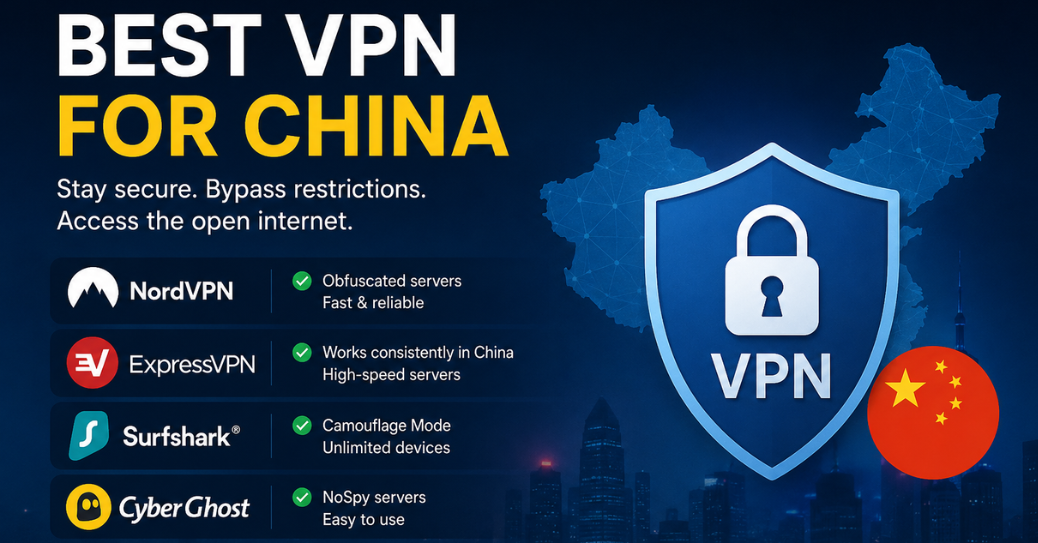
If you’re heading to China for a trip, a work assignment, or a longer stay, you’ve probably already heard that most VPNs simply stop working once you cross the border. China runs one of the most advanced internet filtering systems in the world, and it’s built specifically to detect and block VPN traffic. So the real question isn’t which VPN is the most popular. It’s which VPN actually keeps working once you land.
This guide covers what really matters when choosing a VPN for China, which providers have a solid track record of staying connected, and how to get everything set up before you arrive, since downloading new apps once you’re there can be difficult or impossible.
Why So Many VPNs Stop Working in China
To understand what makes this such a unique challenge, it helps to know how the filtering system actually operates. Rather than simply blocking a list of known VPN server addresses, the system uses deep packet inspection to identify the underlying patterns of VPN traffic itself, even when that traffic is encrypted. That’s why VPNs that work flawlessly in the rest of the world can suddenly become unusable there.
The VPNs that tend to hold up share a few common traits:
Obfuscation technology: Sometimes called stealth mode or camouflage mode, this disguises VPN traffic so it looks like ordinary secure web browsing.
Frequently rotating server addresses: This makes it harder for the filtering system to permanently blacklist a provider’s servers.
Active engineering support: A dedicated team that monitors new blocks and patches around them quickly.
Servers based outside the mainland: Locations such as Hong Kong, Japan, Singapore, and the United States are common and generally more dependable.
If a cheap or free VPN doesn’t mention any of these features, it probably wasn’t built with China in mind, and it’s likely to get blocked within days.
What to Look for in a China Friendly VPN
Rather than chasing flashy marketing claims, focus on these practical factors.
- Recent reliability reports: Look for up to date user feedback confirming the service still connects from inside mainland China, since conditions shift often.
- Obfuscated servers: This is essential. Standard connection protocols get flagged quickly without it.
- Strong speeds: You’ll want enough bandwidth for video calls, streaming, and everyday browsing without constant buffering.
- A trustworthy no logs policy: Ideally one that’s been independently audited.
- Support for multiple devices: You’ll likely want protection across your phone, laptop, and possibly a router.
- Setup before you arrive: App stores and many provider websites are inaccessible from inside the country, so download and configure everything ahead of time.
- Responsive customer support: Ideally available around the clock, since troubleshooting a blocked connection while you’re already there can be stressful.
Reliable VPN Options Worth Considering
One honest note before the list. Enforcement has tightened noticeably in recent times, and a lot of “best VPN” roundups online are outdated or written by affiliates promoting whichever service pays the largest commission. Reliability also shifts from month to month as the filtering technology evolves, so treat any list, including this one, as a starting point rather than a guarantee. Check recent user reports close to your travel date before committing. With that said, these are the providers that consistently come up in independent testing.
ExpressVPN. Often considered the most consistent all around option, largely thanks to its proprietary Lightway protocol and heavy investment in obfuscated servers in Hong Kong and Japan. It’s popular with long term expats for its speed and polished apps, though it sits at the premium end of pricing.
Astrill VPN: A long time favorite built specifically with this use case in mind. Its stealth protocol has one of the strongest track records for surviving crackdowns, which is why many expats keep it as either their main or backup option.
NordVPN: Known for obfuscated servers, a large high speed server network, and modern encryption standards. Performance has been reported as strong by many testers, though results can vary depending on current enforcement levels.
Surfshark: A more budget friendly option that has passed independent firewall tests, with unlimited simultaneous device connections, which is useful for families or anyone traveling with several devices.
Mullvad: A privacy focused, no frills provider that also shows up in recent test results, appealing to users who want a strong no logs reputation without needing a flashy app.
PrivateVPN: A smaller provider that’s a common pick for budget conscious travelers, offering flexible stealth settings at a lower price point than the bigger names.
VyprVPN: Runs its own proprietary Chameleon protocol, another obfuscation method built to disguise VPN traffic, though some streaming platforms can behave inconsistently through it.
Worth noting, providers like Proton VPN and Private Internet Access have reported limited or unreliable performance inside mainland China recently, even though both work well nearly everywhere else. It’s a good reminder that “popular VPN” and “China proof VPN” are two very different categories.
A few practical tips no matter which provider you choose.
- Buy a longer term subscription (one to two years) before your trip. Providers often reserve their best obfuscation features and fastest servers for longer term subscribers, and longer plans are usually cheaper per month anyway.
- Install the app on every device before you leave, and consider a backup provider as well, since redundancy helps.
- Test your connection from a different country first, such as Hong Kong or Taiwan, to confirm the setup works, keeping in mind that mainland blocking can behave differently.
- Save the provider’s direct download link and manual configuration files somewhere offline, in case app stores become unreachable.
Staying Connected for Streaming and Remote Work
Plenty of travelers and expats aren’t just trying to check email. They want to keep streaming services like Netflix or YouTube running, join video calls for work, or access banking apps back home. This is where speed and server variety really matter. Reliable streaming requires enough server locations abroad to avoid buffering, and remote workers should prioritize a business grade plan with strong uptime and static IP options if their company requires them.
If video calls are a priority, look for providers offering low latency servers in nearby regions such as Japan, Singapore, or South Korea. The shorter the distance your traffic has to travel once it leaves the mainland, the more stable your connection tends to be.
Is Using a VPN in China Legal?
This is a common worry, and the honest answer is nuanced. Personal VPN use by foreigners to access international services is extremely common and, in practice, rarely enforced against individual travelers or expats. That said, local regulations technically restrict unlicensed VPN services, and enforcement can shift depending on political circumstances. It’s worth checking your home country’s travel advisories and staying aware of current news before your trip, since rules and enforcement patterns can change with little notice.
Final Thoughts
Choosing the right VPN really comes down to reliability under pressure rather than marketing claims. Prioritize providers with a proven history of staying online inside mainland China, strong obfuscation technology, solid speeds, and a no logs policy you can actually trust. Set everything up before you travel, keep a backup option ready, and you’ll spend far less time fighting your connection and more time enjoying your trip or getting your work done.










 Get survival, travelling and auto tips, follow new technology trends, entertainment stories and world events with PeekTimes.