


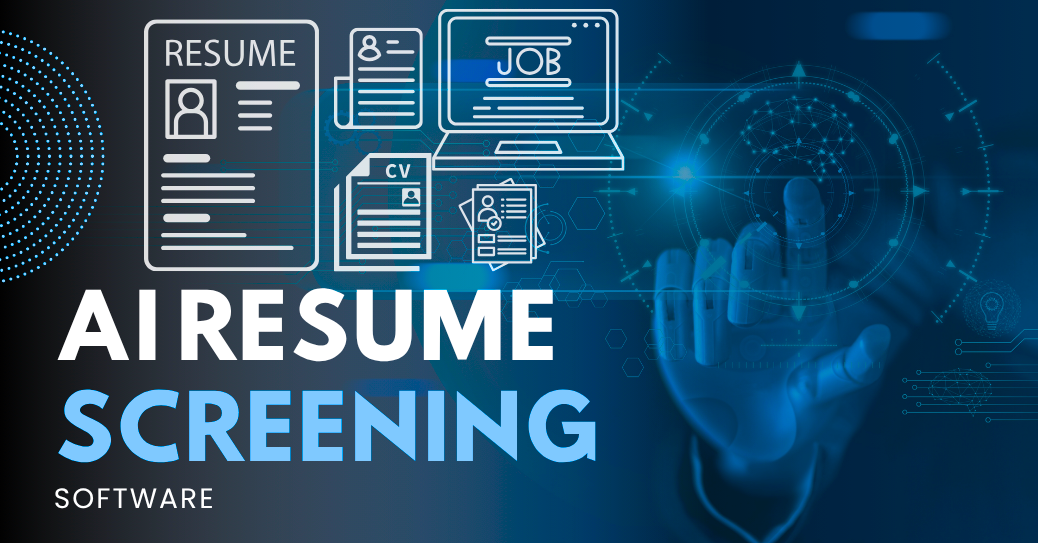
Recruiters spend hours sorting through hundreds of resumes for a single open role. AI resume screening software helps cut that time dramatically while surfacing stronger candidate matches. Modern AI tools for recruitment, including AI-powered applicant tracking systems and automated resume analysis platforms, can quickly evaluate candidate qualifications, identify relevant skills, and rank applicants based on job requirements. This guide reviews the five best AI resume screening software options in 2026, with real pricing and real compliance considerations.
The efficiency gains behind these AI tools are substantial. AI resume screening reduces time spent on initial review by 75% to 80% for most hiring teams. These platforms use artificial intelligence, machine learning algorithms, and natural language processing to analyze resumes at scale, helping recruiters shift focus from manual sorting to actual candidate conversations and interviews.
Adoption of AI hiring software has grown alongside a more complex regulatory landscape that every buyer needs to understand. NYC Local Law 144 has required annual bias audits for automated hiring tools since July 2023, with enforcement tightening through 2026. Companies using AI recruitment tools must evaluate transparency, fairness, and compliance requirements before implementing automated screening systems. Penalties start at $500 per violation and can climb to $1,500 per day for ongoing non-compliance.
This article breaks down the five platforms delivering the strongest AI screening results for real hiring teams. Each section covers pricing, core AI capabilities, automation features, real limitations, and who should buy it. A full comparison table, compliance overview, and FAQ section follow to help businesses choose the right AI resume screening software faster.
Why Hiring Teams Are Adopting AI Resume Screening Software
Resume volume has outpaced what manual review can realistically handle. Popular job postings routinely draw hundreds of applications within days of going live. AI screening software parses every resume automatically and ranks candidates against your actual job criteria.
Speed matters directly to candidate experience and offer acceptance rates. Faster screening means faster first-round interviews, which keeps strong candidates from accepting a competing offer first. Teams using AI screening report meaningfully shorter time-to-first-interview across most industries.
Consistency represents a real advantage over purely manual review processes. A human recruiter’s attention and standards can drift across a long day of resume review. AI screening software applies the same scoring criteria to candidate one and candidate three hundred equally.
Cost efficiency plays a growing role in software selection for lean HR teams. Enterprise platforms with deep AI screening can cost $28,000 or more annually. Budget-focused tools deliver strong screening accuracy starting around $15 to $50 per user monthly instead.
None of this removes the need for human judgment in final hiring decisions. AI screening surfaces and ranks candidates; it does not make the hiring decision itself. The EEOC has stated employers remain responsible for discriminatory outcomes regardless of vendor assurances.
Quick Comparison: 5 Best AI Resume Screening Software
| Tool | Best For | Starting Price | Free Plan | Standout Feature |
|---|---|---|---|---|
| Greenhouse | Mid-size and large structured hiring teams | $6,000+/year | No, quote-only | Structured scorecards and bias-reduction workflows |
| Workable | Growing teams needing sourcing plus screening | $189/month | 15-day trial | 400M+ candidate database with AI matching |
| Manatal | Budget-conscious teams and agencies | $15/user/month | 14-day trial | Affordable AI candidate scoring at scale |
| Eightfold AI | Enterprise talent intelligence at scale | Custom pricing | No | Deep skills-based matching across the full org |
| HireVue | Structured video and resume assessment together | Custom pricing | No | AI-assisted structured interview scoring |
The table above gives you the headline numbers. The breakdowns below explain what each platform actually does inside a real hiring workflow.
1. Greenhouse: The Structured Hiring Standard for Mid-Size Teams
Greenhouse built its reputation on structured hiring methodology, not just AI resume parsing. Its scorecards force every interviewer to rate candidates against the same defined criteria. That structure reduces the inconsistency that undermines fair, defensible hiring decisions.
Pricing is not published and requires a custom quote based on company size and features. Verified buyer data puts Core plans between $6,000 and $10,000 annually for companies under 50 employees. Enterprise Pro plans can reach $50,000 to $70,000 or more annually at scale.
AI candidate matching and sourcing recommendations ship as part of Greenhouse’s standard bundle starting at the Essential tier. The platform’s DEI tooling and bias-reduction workflows go beyond simple resume parsing into the full hiring process. Users report 25% to 40% improvements in quality-of-hire metrics after adopting Greenhouse’s scorecard methodology.
Structured interview kits and automated scheduling reduce administrative overhead for busy recruiting teams. More than 400 integrations connect Greenhouse to the broader HR technology stack most companies already run. That ecosystem depth matters for companies managing complex, multi-stage hiring pipelines.
The pricing floor makes Greenhouse hard to justify for very small teams hiring infrequently. A company hiring fewer than 15 people annually often pays $400 to $600 per hire, well above lighter competitors. Greenhouse earns its cost specifically when hiring volume and structure genuinely matter.
Who should use Greenhouse: Mid-size and large companies hiring 25 or more people annually that need structured, defensible hiring processes.
2. Workable: Best for Teams That Need Sourcing and Screening Together
Workable combines AI resume screening with proactive candidate sourcing in one platform. Its searchable database covers more than 400 million candidate profiles, filterable by role, skills, and employment history. That sourcing depth sets Workable apart from tools that only screen inbound applicants.
Pricing starts around $189 monthly, with AI features included starting on the Standard tier near $299 monthly. A 15-day free trial lets teams test screening accuracy before committing to an annual contract. That entry point sits well below Greenhouse while still delivering meaningful AI screening depth.
AI-powered candidate matching ranks inbound applicants against your job description automatically upon submission. The same AI layer also surfaces passive candidates from Workable’s database who match open roles. Recruiters get both inbound screening and outbound sourcing without switching between separate tools.
Workable fits companies in the growth stage between small startup and full enterprise particularly well. Teams between 50 and 200 employees find Workable handles that range without the complexity of enterprise TA suites. LinkedIn paid job posting integration adds further reach without leaving the platform.
Workable costs meaningfully more than budget-focused competitors like Manatal for comparable core screening features. Confirm which AI features actually live on your target tier before assuming Standard pricing covers your needs. Companies purely focused on inbound screening without sourcing needs may find the extra cost unnecessary.
Who should use Workable: Growing companies between 50 and 200 employees that need both sourcing and AI-powered screening in one platform.
3. Manatal: The Best Value AI Screening Tool for Budget-Conscious Teams
Manatal delivers genuine AI candidate scoring at a price point far below most competitors on this list. Its Professional plan starts at $15 per user monthly billed annually, or $19 month to month. That entry tier caps at 15 open jobs and 10,000 candidates, sufficient for most small teams.
Teams exceeding that cap move to the $35 per user tier for unlimited jobs and candidates. Even at that higher tier, Manatal remains dramatically cheaper than Greenhouse or Workable for comparable core AI scoring features. A 14-day free trial requires no credit card, making evaluation genuinely risk-free.
AI-powered resume parsing extracts structured candidate data automatically, then scores each profile against job requirements. Recruiting agencies specifically favor Manatal for its combination of affordability and outbound sourcing capability. The platform punches above its price point without pretending to be full enterprise software.
Manatal intentionally trades away some of Greenhouse’s process enforcement and bias-audit tooling for its lower price. Teams coming from a more structured ATS will notice the absence of formal interview kits and scorecard workflows. That tradeoff matters most for companies with strict compliance or DEI reporting requirements.
Boutique recruiting agencies doing heavy outbound sourcing consistently choose Manatal as their primary tool. Small businesses hiring casually, without complex compliance needs, get strong value at this price point. Companies needing formal bias-audit documentation should confirm Manatal’s audit trail meets their specific regulatory requirements.
Who should use Manatal: Budget-conscious small teams and boutique recruiting agencies that want AI scoring without enterprise pricing.
4. Eightfold AI: The Enterprise Choice for Deep Skills-Based Matching
Eightfold AI operates as a full talent intelligence platform rather than a standalone resume screener. It analyzes skills, experience, and career trajectory to predict candidate fit and future performance. Large enterprises use Eightfold to manage sourcing, screening, and internal mobility inside one system.
Pricing is not published and scales with organization size and module selection. Enterprise contracts for platforms in this category commonly start in the tens of thousands of dollars annually. Budget for implementation and integration costs alongside the core subscription when evaluating total cost.
Machine learning models inside Eightfold forecast candidate success and retention risk, not just keyword match quality. That predictive layer adds strategic hiring value beyond basic qualification screening. Large enterprises managing thousands of applications monthly rely on this depth to prioritize recruiter attention effectively.
Skills-based matching extends across the full employee lifecycle, not just initial hiring, inside Eightfold’s platform. Internal mobility and reskilling recommendations pull from the same AI matching engine used for external hiring. That breadth appeals to enterprises trying to reduce external hiring costs through internal talent moves.
Legal scrutiny around AI hiring tools has intensified, and buyers should factor this into any enterprise evaluation. A January 2026 FCRA lawsuit specifically named AI matching depth as a point of legal concern industry-wide. Resource any enterprise AI screening rollout with a bias audit from day one, regardless of vendor.
Who should use Eightfold AI: Large enterprises that need skills-based matching across hiring, internal mobility, and workforce planning together.
5. HireVue: Best for Combining Structured Video and Resume Assessment
HireVue pairs AI resume screening with structured video interview analysis in one workflow. Candidates complete an initial video assessment alongside their resume submission for many roles. That combination gives recruiters more signal than resume text alone typically provides.
Pricing is not published and requires a custom quote based on hiring volume and module selection. Enterprise-scale deployments typically involve both a subscription fee and implementation support costs. Request a detailed quote and compare it against your actual annual hiring volume before committing.
Structured assessment scoring reduces reliance on unstructured phone screens that vary heavily by interviewer. AI-assisted scoring applies consistent criteria across every video response submitted for a given role. That consistency helps standardize an early-stage process that historically depended entirely on individual recruiter judgment.
HireVue’s assessment-first approach fits industries with high-volume, standardized hiring particularly well. Retail, hospitality, and call center hiring at scale benefit from consistent, fast first-round screening. Roles requiring nuanced, unstructured conversation may not fit HireVue’s structured format as naturally.
Video-based AI assessment tools face specific regulatory scrutiny beyond standard resume screening rules. Illinois’ AI Video Interview Act imposes disclosure requirements specific to video-based candidate assessment. Confirm compliance obligations in every jurisdiction where you hire before deploying video-based screening broadly.
Who should use HireVue: Companies running high-volume, standardized hiring who want structured video assessment alongside resume screening.
Full Cost and Feature Breakdown
| Factor | Greenhouse | Workable | Manatal | Eightfold AI | HireVue |
|---|---|---|---|---|---|
| Pricing model | Custom quote | Per company tier | Per user | Custom enterprise | Custom enterprise |
| Entry cost | $6,000+/year | $189/month | $15/user/month | Custom, high five-figure+ | Custom |
| Free trial | No | Yes, 15 days | Yes, 14 days | No | No |
| Sourcing database | Limited | 400M+ profiles | Add-on sourcing | Internal + external | Not primary focus |
| Bias-audit tooling | Strong, built-in | Moderate | Basic | Strong, enterprise-grade | Strong, video-specific |
Use this table to shortlist two platforms before requesting a demo. Most teams end up choosing based on hiring volume and compliance requirements more than feature checklists alone.
What Every Buyer Should Know About AI Hiring Compliance
Regulatory scrutiny of AI resume screening has intensified significantly through 2026. NYC Local Law 144 requires an independent bias audit within the past year, public disclosure of results, and at least 10 business days’ notice to candidates. Non-compliance penalties run from $500 to $1,500 per violation, with violations counted per candidate per day.
Enforcement has been inconsistent but is tightening according to recent oversight reports. A December 2025 New York State Comptroller audit found significant gaps in how the city has enforced the law so far. Major employment law firms now warn employers to expect stricter enforcement through the remainder of 2026.
The regulatory landscape extends well beyond New York City specifically. Illinois, California, Colorado, and Maryland have implemented or proposed similar AI hiring regulations. The EU AI Act adds its own high-risk classification for hiring tools, with penalties reaching millions of euros for violations.
Federal guidance has shifted in ways that make vendor selection more important, not less. The EEOC’s earlier technical guidance on AI hiring tools was removed from its website amid a broader regulatory rollback. That change does not eliminate employer liability; it shifts more risk assessment responsibility onto the employer directly.
Ask every vendor on your shortlist for their current bias audit documentation before signing a contract. A platform without a clear, recent, independent bias audit creates real legal exposure for your company, not the vendor. Build a compliance review into your procurement process regardless of company size or hiring volume.
How to Choose the Right AI Resume Screening Software
Start by counting your actual annual hiring volume before comparing pricing pages. Teams hiring fewer than 15 people annually rarely justify Greenhouse’s pricing floor. Higher-volume hiring teams get clearer ROI from Greenhouse or Workable’s deeper structured features.
Match the tool to your compliance exposure honestly, not just your budget. Companies hiring in NYC, Illinois, or the EU face real regulatory requirements that budget tools may not fully support. Confirm bias-audit documentation and candidate notice features before deploying any AI screening tool in a regulated jurisdiction.
Test the free trial before committing to an annual contract wherever one is available. Workable and Manatal both offer meaningful trial periods for real evaluation against your actual job postings. Screen one real requisition during the trial and compare AI rankings against your own manual assessment.
Confirm integration compatibility with your existing HR technology stack before switching platforms. Greenhouse’s 400-plus integrations reduce friction for companies with an established HR tech ecosystem. Smaller, standalone tools may require more manual data transfer between systems.
Keep a human reviewer in the loop for every final hiring decision, regardless of AI ranking accuracy. AI screening narrows the pool efficiently, but final judgment calls still belong to a trained human recruiter. That human layer also provides your best defense against unintended bias in automated ranking.
Common Mistakes Companies Make With AI Resume Screening Software
Skipping the bias audit entirely creates real legal exposure that grows more serious every year. Employers, not vendors, bear responsibility for discriminatory outcomes under current EEOC guidance. Request documentation before deployment, and schedule the annual re-audit before it becomes overdue.
Choosing a platform based purely on screening speed ignores compliance and structure needs specifically. A fast, cheap tool without bias-audit support can create costly legal exposure down the line. Weigh compliance capability alongside speed and cost when evaluating any shortlist.
Over-relying on AI rankings without any human spot-check undermines both accuracy and fairness. AI screening tools occasionally miss strong candidates whose resumes don’t match expected keyword patterns closely. A periodic manual review of rejected candidates catches these gaps before they become a pattern.
Ignoring candidate notice requirements damages both compliance standing and employer brand simultaneously. Candidates increasingly expect transparency about AI involvement in their application review. Build clear notice language into your careers page and application process regardless of legal minimums in your jurisdiction.
Frequently Asked Questions About AI Resume Screening Software
Which AI resume screening software is best for a small business? Manatal offers the strongest value for small teams at $15 per user monthly. Its 14-day free trial lets you test screening accuracy before committing to a paid plan.
Is AI resume screening legal? Yes, but it comes with real compliance obligations in many jurisdictions. NYC Local Law 144, Illinois law, and the EU AI Act all impose specific requirements on automated hiring tools.
How much time does AI resume screening actually save? AI resume screening reduces initial review time by 75% to 80% for most hiring teams. That time savings compounds significantly across high-volume roles receiving hundreds of applications.
Does AI resume screening introduce bias into hiring? It can, if not properly audited and monitored. Regular independent bias audits and human oversight of AI rankings both reduce that risk meaningfully.
What is the difference between Greenhouse and Workable? Greenhouse focuses on structured hiring methodology and scorecards for larger, higher-volume teams. Workable adds a large sourcing database alongside AI screening at a lower price point.
Do I still need a recruiter if I use AI resume screening software? Yes. AI narrows the candidate pool efficiently, but final hiring decisions still need human judgment. Recruiters also provide the compliance oversight that regulations increasingly require.
Final Words
AI resume screening software has become standard infrastructure for hiring teams managing real applicant volume. Greenhouse, Workable, Manatal, Eightfold AI, and HireVue each solve a different piece of the screening puzzle. The companies getting the strongest results match the platform to their hiring volume and compliance exposure.
Start with the platform that fits your actual hiring scale today. If you hire fewer than 25 people annually, start with Manatal. If structured process and compliance matter most, start with Greenhouse instead.
One principle holds true across every platform on this list. AI speeds up screening dramatically, but human oversight and bias-audit compliance remain non-negotiable. Build that oversight into your process first, and the right software choice becomes far easier to make.




 Get survival, travelling and auto tips, follow new technology trends, entertainment stories and world events with PeekTimes.